
It's frustrating when your website can't break onto the first page of Google results for that high-volume search term you've been trying to target, but it's even more frustrating when your website isn't showing up on Google at all.
It's frustrating when your website can't break onto the first page of Google results for that high-volume search term you've been trying to target, but it's even more frustrating when your website isn't showing up on Google at all.
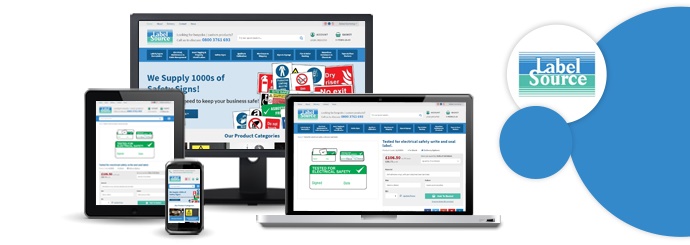
Label Source are a UK-based business who supply a comprehensive range of labels, tags and signs to customers all over the world. Their product range is too diverse to list in full right now, but here are just a few examples of what they offer:
Label Source recently asked us to give their old website a new, more modern-looking design; more specifically, they wanted to make it easier for smartphone and tablet users to view Label Source's products and make purchases online.
We're pleased to announce that Label Source's new and improved website is now live - visit www.labelsource.co.uk now to see how it looks.
In addition to the clean, professional new look that we created for the Label Source website, we also made the following changes:
Do you have an ecommerce website that's in need of a redesign? Contact Designer Websites for a quotation!
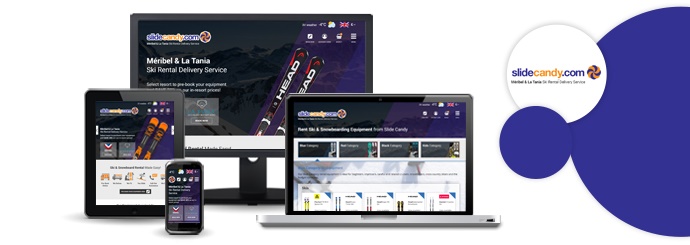
Ski season is upon us once again, and with many thousands of people set to hit the slopes between now and the spring thaw, Slide Candy - a ski equipment rental company serving the Méribel and La Tania resorts in France - wanted to make sure that their online presence was in peak condition.
The Slide Candy team asked Designer Websites to give their site a modern new look that would appeal to skiers and snowboarders of all ability levels. Their new and improved website is now live - visit www.slidecandy.com to view it.
Here are just a few of the features that we built into the new Slide Candy site:
If you like the look of the new Slide Candy website and you want the Designer Websites team to create a responsive ecommerce site for your business, please get in touch today to request a quote.
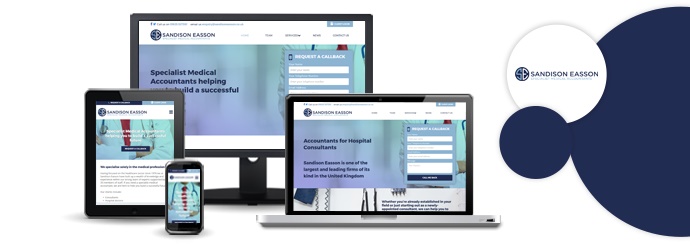
With offices in both Cheshire and London, Sandison Easson & Co. are among the UK's leading medical accounting firms. Catering exclusively to clients in the medical and dental fields, the Sandison Easson team provide a wide variety of specialist services, including:
The firm's clients include GP practices, consultants, registrars, and dental clinics.
The Sandison Easson team got in touch with Designer Websites because their website was old, dated, and not particularly representative of the highly professional service they provide. We were asked to design and develop a responsive brochure website that would meet the following criteria:
In addition to the mobile-friendly design and easy-to-use enquiry form, the new Sandison Easson website features a professional-looking 'Meet the Team' page, a client login function, and a blog where the firm will be able to share all their latest updates and insights. See the site for yourself at www.sandisoneasson.co.uk.
If you need a professional-looking website for your business, please don't hesitate to get in touch with the team here at Designer Websites. Request a free, no-obligation quote for your project here.
Since it was launched all the way back in 1997, Google Search has grown increasingly sophisticated and intelligent. Where once it simply looked at your search term and gave you a list of web pages containing that term, the search engine's algorithm can now understand and interpret queries on an almost-human level.
This acute understanding of search intent is visible in the highly-tailored results that Google now delivers whenever a search is performed. Here's just one example:
Three very similar searches, three very different sets of results.
This example demonstrates just how much Google (and its competitors - you'll get similar results if you try the same experiment on Bing or Yahoo) can now read into our search queries. Superficially, the phrases 'swimming pool' and 'swimming cap' are very much alike, but modern search engine algorithms have a very strong grasp of what different words mean and - more importantly - what we mean when we use those words.
Google and the other search engines didn't get this clever overnight. Their current level of sophistication is the result of years of testing and fine-tuning and gradual improvement.
In Google's case, a technology called RankBrain is largely to thank for the algorithm's advanced understanding of search intent. RankBrain is an artificial intelligence system that learns as people search; when you google a phrase that RankBrain hasn't seen before, it makes an educated guess based on the meanings and common usages of the words you entered, then serves up results accordingly.
Here's what this process might look like in action:
(In reality, of course, Google's all-knowing algorithm would already be aware of the Magic Pencil film and would thus have a far better clue as to what you were after. This is just a hypothetical example that shows how RankBrain can infer meaning from what looks at first glance like a string of random, unrelated words.)
As Google has become more and more sophisticated, website owners who rely on organic Google traffic have had to become more and more sophisticated in their tactics. Ranking on the first page of Google results is no longer as simple as picking a popular keyphrase and using that phrase a certain number of times within your page copy; even if your page has a tonne of great links from high-authority websites, this won't necessarily guarantee you a high organic ranking in the current search climate. Google now prioritise search intent above all else, which means that webmasters and SEOs must do the same.
In order to get the very best results, search intent should be kept in mind throughout the entire website optimisation process, starting with keyword selection. Let's say you're setting up a new online sports equipment store - you're trying to decide what kind of searches you want to show up for, so the first thing you do is visit Keyword Planner and type in 'sporting goods' to see what gets the most searches.
When you order the resulting list of keywords by number of searches, it looks something like this:
Lots and lots of people enter the words 'sprinter' and 'sporting' into Google every month, but trying to capture that traffic with a sporting goods website would be virtually pointless because the vast majority of those people won't be looking to buy sports equipment. Instead of picking the most popular term you can find that's vaguely related to sports, it's far better to pick a term that reflects the intent of your target audience.
Here's another example. According to Keyword Planner, 1.5 million people google the word 'tennis' every month, whereas the term 'buy tennis shoes' only gets a few thousand searches in an entire year. However, the 'buy tennis shoes' people are a far better match, intent-wise, for your ecommerce website than the people who simply type in 'tennis' - they could be looking for player rankings, or match reports, or information on the sport itself, whereas you wouldn't type in 'buy tennis shoes' if you weren't at least thinking of buying some tennis shoes.
If you're not sure whether the keywords you've chosen are a good fit for your website, google them! The results that pop up should give you a pretty good idea of what people mean when they use each term. For instance, most of the results for 'best football boots' are informative articles and lists, suggesting that Google sees this as a learn term rather than a buy term.
This keyword might be worth targeting with an informative, well-written blog post, but your shop page probably isn't a good fit.
By contrast, the results for 'cheap football boots' are all online stores where you can buy football boots, indicating that this term is a better match for your store's footwear department.
So you've chosen a good set of keywords that are highly relevant to your website and what it has to offer. The next challenge is actually ranking for those keywords (i.e. appearing among the top results when somebody types one of those keywords into Google). To do this, you'll need to create content that meets the needs of your target audience.
What that doesn't mean is writing a thousand words about your chosen topic. As we explained earlier, it's not enough to just repeat your keywords over and over again and hope that Google will take the hint. You need to properly assess the intent behind each term you're targeting, then craft a high-quality web page that satisfies that intent.
We've already seen several examples of what that looks like in practice. You want to be the #1 result for 'best football boots'? You need to research the latest products and write a thorough article that lists the best boots and explains what makes them so great. More interested in showing up for 'cheap football boots'? In that case, you need to make sure you've got a secure, smooth-functioning ecommerce website that makes it easy for people to buy boots online, and at genuinely low prices.
Again, if you're not sure what kind of content you need to create for the keyphrase you're targeting, head to Google and see what already ranks on page 1. This will tell you what Google considers a good, relevant result for that query.
This debate has been raging for quite a while now. Back in the day, targeting a particular keyphrase meant including that phrase in your website copy as many times as you possibly could. Known as keyword stuffing, this practice is best avoided in 2017 because the Google algorithm now penalises websites that do it.
With that in mind, it's best to take a more cautious approach these days: use your keyphrase frequently, but NOT to the point of sounding 'unnatural'. The litmus test is to read your content aloud - as long as it sounds like something a human might actually say, you're probably safe. Here's an example...
Nowadays, most SEO authorities agree that keyword density is nowhere near as important as tailoring your content to search intent. In other words, identify the need that you're trying to meet, then write copy that's suited to that need. Somebody who wants to buy a toaster is going to be more interested in your prices, your website layout, and the security of your online checkout system than in how many times you've written the word 'toaster'.
However, while this principle - 'make web pages for users, not search engines' - sounds reasonable enough in theory, it's a bit muddier than that in practice. While search engines are incredibly intelligent, they're still nowhere near as intuitive as actual human beings, and Google do still rely on keyword matching to some extent. Remember our Penelope and the Magic Pencil example from earlier? Your cinema won't show up for a term like that unless you've got the name of the film somewhere on your page, just as your sports store probably won't rank for 'cheap football boots' unless you've used the word 'football' in your copy at least once or twice.
The main difference between SEO in 2007 and SEO in 2017 is that, when it comes to keyword insertion, quantity doesn't really matter. Don't worry about keyword density or anything like that - instead, focus on making sure that your keywords are present in the places that count.
In rough order of importance, these are:
As far as the actual body text of your page is concerned, you shouldn't really have to think about whether or not to include your keywords: it's difficult to write even a few sentences about football boots without using the term 'football boots'. Bear in mind also that RankBrain assesses meaning and relevance based on the semantic relationships between different words and phrases, so a page that mentions 'football boots' over and over again probably won't rank as well as a page that uses lots of different football- and boot-related terms (goal, pitch, striker, tackle, kick, grip, studs, and so forth).
Here's a basic plan to follow when trying to optimise a website for search intent:
Of course, this is just the first step - links, reviews, blog posts, social shares, and lots of other things are often necessary to make it onto the first page. However, if you follow this plan, you'll have a strong chance of eventually achieving high rankings and capturing lots of high-quality traffic that actually converts.
If you need help driving organic traffic to your website, get in touch with Designer Websites - our SEO experts can help you to select the right keywords, create the right content, and reach the right people.