Tag: seo

RJ Funerals Website

Robert D. Johnson Funeral Directors are an independent funeral service based in Barry, Vale of Glamorgan. This family-run business specialises in bespoke, flexible funeral services for families who are looking to make arrangements after the passing of a loved one. With extensive experience in funeral care, they ensure every family receives the service they’ve envisioned for their dearly departed – while alleviating them of the stress of organising the funeral arrangements during their period of grief.

Robert D. Johnson Funeral Directors offer the following funeral packages:

As an independent business, Robert D. Johnson offer a caring, personal service that large chains are sometimes unable to provide. Staff are selected on the basis of their professionalism and caring approach to their work.

How Did We Help Them?

We have created a user-friendly brochure website for Robert D. Johnson Funeral Directors. The new design is professional and befitting of the industry in which this client operates, and the website interface is very easy for users to navigate. Visit www.rjfunerals.co.uk to take a look at our work.

We provided:

  • Responsive Website Design – The RJ Funerals website functions well across all screen sizes whilst maintaining its sophisticated look. Regardless of the device used to access the website, the pages of the website maintain their look and ease of navigation.

  • Search Engine Optimisation – Every page on the new RJ Funerals website features high-quality content which is relevant to the user, effective in communicating the services offered, and carefully optimised for high Google rankings.

Do you need a bespoke, professional website to showcase your business and the services you offer? If so, get in touch with Designer Websites for a free, no-obligation quote.

Get a Web Design Quote >

Ultrasound Plus Website

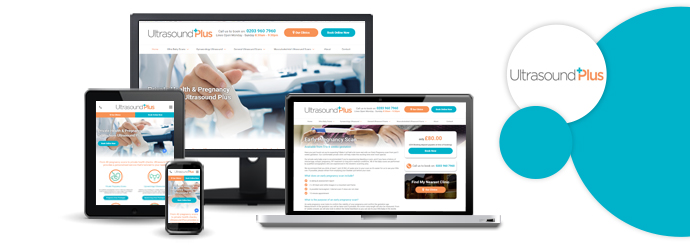
We’ve just developed a new website for a leading UK ultrasound business with a range of clinics in London, Essex, Hertfordshire, Surrey and Kent. Ultrasound Plus provide professional scanning for a range of needs and clients, including:

  • Baby Scans – 3D/4D, Early Pregnancy, Dating, Gender, Reassurance, Anomaly, Growth, and Presentation scans
  • Gynaecology Scans
  • General Scans – Upper Abdomen Ultrasound, Kidneys, Ureters and Bladder Scans and;
  • Musculoskeletal Scans

Why did Ultrasound Plus come to us?

Ultrasound Plus came to us because they needed a new website with a significantly improved customer experience, and an optimised website to improve their online visibility.

We designed a brand-new website with a clear target of maximising customer engagement and improving rankings on the major search engines. Click here to view the new and improved website.

The new and improved website has:

  • A bespoke and responsive design
  • A blog where the company can share news and updates
  • Improved Search Engine Optimisation

If you require a professional-looking website for your business, that is easy to navigate on any device, then get in touch with our team here at Designer Websites on 01446 339050 or request a free, no-obligation quote.

Quick SEO Tips

Search engine optimisation (SEO) is a pretty complex subject. Gone are the days when all you had to do was pick a keyword and stuff it into your page copy as many times as possible - if you want to conquer the Google results in 2018, there are all sorts of different factors you need to think about. And of course, since the algorithms are always changing, you'll need to keep your eyes open and stay abreast of all the latest updates if you don't want to be left behind.

Still, perhaps you're not looking to become an all-powerful SEO guru. Maybe you're just looking for a few quick tips that will help you boost your traffic without paying for ads. If that's the case, we hope that these 10 tips (brought to you by the Designer Websites SEO team) will serve you well:

1. Check your site's health on Google Search Console.

Google Search Console (google.com/webmasters/tools/home) is an indispensable tool that all website owners should use. Once you've added and verified your website, check out our beginner's guide to make sure you know what to look out for.

Oh, and while you're logged in...

2. Submit your sitemap to Google.

Go to the Crawl section in Google Search Console and select Sitemaps. This is where you can submit your website's XML sitemap file to Google - this makes it easier for the big G to index your content, and the Sitemaps tool will also inform you of any problems that are affecting pages you submit.

3. Take a good look at your title tags.

There are many different factors that decide whether a web page makes it into the top 10 Google results, but the page's title tag may be the most important of all. A page's title tag should ideally be no more than 60 characters in length, and it should be a clear, concise, and keyword-rich description of what that page is for.

Use Moz's title tag preview tool to see what your title tag will look like on Google (this is a good way to identify whether your title tag is too long).

4. Make sure your meta descriptions are snappy and engaging.

Unlike the title tag (see above), your page's meta description probably won't have a huge impact on rankings. However, it can make the difference between a Google user clicking on your result and scrolling straight past it.

You know the short paragraph of text that appears under most Google results? Very often, that blurb is pulled directly from the page's meta description.

So be sure to make all of your meta descriptions concise, engaging and punchy. Sell your product/service and explain why people should choose you over your competitors...but try to do it in as few words as possible! (Google recently extended the maximum length for meta descriptions, but we still recommend keeping them short and snappy where possible.)

5. Check for keyword cannibalisation.

Keyword cannibalisation occurs when a website has two (or more) pages competing against each other for a specific keyphrase. It should be avoided, since Google may not be able to discern which page you actually want to rank for the keyphrase in question.

For more information on keyword cannibalisation and how it can scupper your SEO efforts, read our blog on the subject here.

6. Claim your Google My Business listing.

Google My Business listings are crucial for local businesses with bricks-and-mortar locations that are open to the public, but even if your business is online-only, you should still think about claiming your listing. Go to google.co.uk/business and enter your company details so that Google can show more information about your business - don't worry, you can keep your address hidden if you don't want people turning up on your doorstep.

7. Link to high-authority websites.

Some people will tell you that you should never link out to other websites, but the evidence seems to suggest that outgoing links can have a positive effect on your rankings when done carefully. Just make sure that you're linking to authoritative sites that are relevant to the topic you're focusing on.

8. Share your knowledge in blog posts.

If your company's website doesn't have a blog, you're missing out on a huge opportunity to share your expertise and get your brand seen by a wider audience. Google loves in-depth, well-written articles from people who know what they're talking about, and nobody knows your business better than you do, so what are you waiting for? Get writing!

To make sure you're writing blog posts that will actually drive traffic to your website, we recommend using tools like Google Keyword Planner and AnswerThePublic.com to find out what people search for when they're looking for information on your specialist subject.

9. Add alt tags to your images.

Google's bots are very clever when it comes to understanding and indexing text-based content, but they're not so good with images. In order to help them index your images properly (and potentially show them as results on Google Images), you should make sure that every image on your website has an alt tag that gives an accurate description of what the image depicts.

Not only will this help you to capture traffic from image searches, it may also boost the perceived relevance of your pages if the alt tag is relevant to the keywords you're targeting. For example, if you're trying to rank for the term 'how to fix a dripping tap', your page may rank better if it features some pictures of taps, pipes, plumbers, and other related things/concepts.

10. Above all, focus on search intent and user experience.

Search engine optimisation shouldn't be an attempt to game the system or 'trick' Google into ranking your website. Ultimately, your goal should be the same as Google's goal: to give each user the best possible answer to their query.

So, when targeting a specific search term, make sure your page meets the needs expressed by that term and gives people the perfect online experience. This can mean any number of different things, such as:

  • Making key information stand out more
  • Improving your website design
  • Reducing your prices
  • Giving more details about your products
  • Being more transparent about who you are and what you do with the information you collect from users

These are just a few examples. Put yourself in the shoes of an average website user and go through your website from their point of view - is there anything that could be improved, or any parts of the buying journey that are needlessly complicated or fiddly?

For more help with this, read our blog about search intent.

Do you need someone to take a proper look at your website's SEO? Get in touch with the Designer Websites team today - we're great at boosting organic traffic and creating smooth user journeys!

Why won't my website show up on Google?

It's frustrating when your website can't break onto the first page of Google results for that high-volume search term you've been trying to target, but it's even more frustrating when your website isn't showing up on Google at all.

Long Tail Keywords


Trying to rank on search engines, like Google, is becoming more and more difficult, especially with the ever-changing face of SERPs (Search Engine Results Pages) and the growing competition online. Finding ways to capture traffic to your website is absolutely crucial to online success, and often this means attempting to get your website in a top position on the front page of Google, the holy grail of search engine traffic – but how can you achieve this?

We all want our websites to be found on page 1 for broad search terms that represent our business, but this can be extremely hard if your business faces significant competition online, especially where the competition is very large brands with deep pockets for marketing. However, all is not lost, in fact, this often means that you just have to work a little harder at long tail keywords, which more often than not can drive the most valuable traffic to your website.

In this article, we will be explaining what long tail key words are, and how targeting them can help to drive valuable traffic to your website.

What are long tail keywords?

A long tail keyword is a search term that is typically around 2-4 words long, albeit they can be longer. A long tail key word is mostly defined by how specific it is rather than its length.

Example broad search term: Exercise Class

Example Long-tail keyword: Boxercise Classes in Cardiff

So, unlike broad search terms, long-tailed keywords are far more specific, and therefore usually have substantially lower search traffic volumes. So why use them? We want MORE traffic not less, so why target phrases with substantially fewer searches?

Well, in the example above, the chances are that your business offers more than just Boxercise classes. So now the next step is to consider a page targeting each keyword term e.g. Spin Classes in Cardiff, Zumba Fitness Training, Hardcore Fitness Class, etc. Through this, you can start to build the volume of traffic up, and all you’ve done is negate the types of broad searches that may not have resulted in a buyer anyway.

Over the last decade, consumer searching habits have become more defined as users have become savvier with search engine result. This means that people tend to understand that a broad search for anything will not necessarily deliver what they are looking for, so they now naturally provide more specific search terms.

You can take advantage of this new method of search with long tail keywords. A lot of big companies rely heavily on the broad terms as they believe this provides them with a stronger position, but invariably it actually doesn’t. This is why long tail keywords will work in your favour as there is less competition from the larger companies. 

Why should we use long tail keywords?

The most important thing on your website is your call to action. So in this case, you want someone to sign-up for a class, right? Therefore, what you need is traffic that results in conversions, not just random visitors which makes long-tailed keywords very useful. Imagine you're a gym based in Cardiff and ask yourself this: will it be easier to convert someone who searched “Exercise Class” or “Boxercise Class in Cardiff”?

Long-tailed keywords are now natural searches for result-savvy consumers, but for the not so savvy searchers, they tend to come a little later. For example, a user might start by searching for “exercise class” and then realise that it’s not really what they were looking for, or the gyms advertised were national and not local, so they decide to search for “exercise classes in Cardiff”.  They then find gyms but not necessarily the classes they want, so next, they search for something even more specific, like “Zumba classes in Cardiff”, and finally they receive the results they were looking for. Either way, we all usually end up searching for what we want via long tail keywords when we are serious about buying or booking.

With that being said, in some cases, it may well be necessary to target obvious ‘broad’ search terms for your business. However, it is highly likely you will be faced with a high-budget battle against your competition. In this case, we recommend working on your long tail keyword opportunities first and then focusing on the broad terms for your business.

Long tail keywords also apply to PPC advertising

If you run pay per click (PPC) advertising for your website, then it would benefit your business to consider the same strategy. For example, setup your campaigns to focus on the long tail keywords first, and then work backwards to include some of the broader search terms for your industry in tightly budgeted campaigns. This usually results in much better conversions on the long tail keywords, and a mopping effect on the broad terms, which tend to be more expensive.

Long-tail keyword focus will reduce your bounce rate

The bounce rate on your web pages essentially tells you how many people search for a term, or hit a link to your website, and only read one page before leaving. High bounce rates are generally-speaking very bad because it likely means someone who found your website left before navigating around - although, of course, there are instances where this is acceptable behaviour.

A typical example of a searcher who bounces is where a consumer has searched for, say “exercise class”, and they hit a page showing a gym not local to them, or doesn’t have the specific class they are looking for, and so they leave within seconds. This will happen a lot if you focus heavily on broad search terms.

If your website focusses heavily on long tail keywords instead, then you will attract searchers who are looking more specifically for that product or service and are therefore less likely to bounce, and more likely to buy.

How to choose the right long tail keywords?

Do your research

You need to spend time doing valuable keyword research. You may assume that your customers think about your brand, products or services in the same way that you do, but that doesn't mean they will search for you in the same way. Although you may be an expert in your industry, it is still vital to research what is actually generating search traffic to figure out what keywords you should target.

Tools such as Google's Keyword Planner allow you to see statistics concerning search volume and estimated bid costs for different keywords. This provides you with an opportunity to weigh up your options and make a logical keyword plan.  There are other keyword research tools out there, but these are beyond the scope of this article.

Identify niches

As discussed, long tail keywords allow you to better target consumers who are more focused in terms of what they are looking for. This often occurs once the person has done their product/service research and have a better idea of what they are looking for, and will naturally narrow their search term.

So, we talked about exercise class types and using the niche terms for these, but colours are often a good niche in certain markets too. For example, someone who may be interested in buying decking may have looked through various websites and information. Following this research, that customer has learned more about the product that best suits their requirements. Through this product research, the customer has arrived at the conclusion that they would like “grey composite decking”, which is now the term they search for, therefore targeting this niche term and bringing you closer to capturing a sale.    

Your keyword research should include as many niche terms as you can think of, as these often produce highly valuable search terms.

Keep it balanced

As discussed earlier, a wise place to start is to focus on the long-tail keywords first, and then later consider the broader terms, which should result in a balanced strategy.

Remember to focus on a small set of keywords per page, and do not contaminate other pages with the same keywords (read more about why you should avoid this here). Good luck! 

For expert advice on this subject, or any other online marketing subject, our team of friendly SEO Experts would be more than happy to assist, so if you need help please get in touch with us!