Tag: search-engine-optimisation-seo

Ultrasound Plus Website

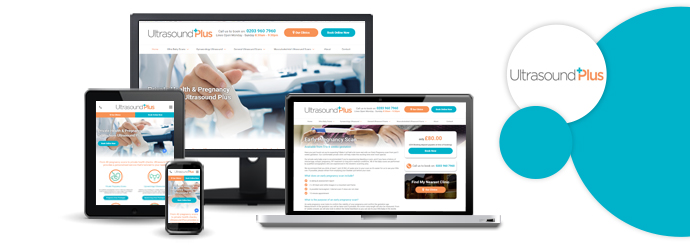
We’ve just developed a new website for a leading UK ultrasound business with a range of clinics in London, Essex, Hertfordshire, Surrey and Kent. Ultrasound Plus provide professional scanning for a range of needs and clients, including:

  • Baby Scans – 3D/4D, Early Pregnancy, Dating, Gender, Reassurance, Anomaly, Growth, and Presentation scans
  • Gynaecology Scans
  • General Scans – Upper Abdomen Ultrasound, Kidneys, Ureters and Bladder Scans and;
  • Musculoskeletal Scans

Why did Ultrasound Plus come to us?

Ultrasound Plus came to us because they needed a new website with a significantly improved customer experience, and an optimised website to improve their online visibility.

We designed a brand-new website with a clear target of maximising customer engagement and improving rankings on the major search engines. Click here to view the new and improved website.

The new and improved website has:

  • A bespoke and responsive design
  • A blog where the company can share news and updates
  • Improved Search Engine Optimisation

If you require a professional-looking website for your business, that is easy to navigate on any device, then get in touch with our team here at Designer Websites on 01446 339050 or request a free, no-obligation quote.

Quick SEO Tips

Search engine optimisation (SEO) is a pretty complex subject. Gone are the days when all you had to do was pick a keyword and stuff it into your page copy as many times as possible - if you want to conquer the Google results in 2018, there are all sorts of different factors you need to think about. And of course, since the algorithms are always changing, you'll need to keep your eyes open and stay abreast of all the latest updates if you don't want to be left behind.

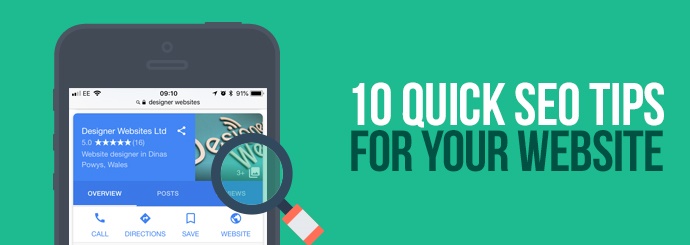
Still, perhaps you're not looking to become an all-powerful SEO guru. Maybe you're just looking for a few quick tips that will help you boost your traffic without paying for ads. If that's the case, we hope that these 10 tips (brought to you by the Designer Websites SEO team) will serve you well:

1. Check your site's health on Google Search Console.

Google Search Console (google.com/webmasters/tools/home) is an indispensable tool that all website owners should use. Once you've added and verified your website, check out our beginner's guide to make sure you know what to look out for.

Oh, and while you're logged in...

2. Submit your sitemap to Google.

Go to the Crawl section in Google Search Console and select Sitemaps. This is where you can submit your website's XML sitemap file to Google - this makes it easier for the big G to index your content, and the Sitemaps tool will also inform you of any problems that are affecting pages you submit.

3. Take a good look at your title tags.

There are many different factors that decide whether a web page makes it into the top 10 Google results, but the page's title tag may be the most important of all. A page's title tag should ideally be no more than 60 characters in length, and it should be a clear, concise, and keyword-rich description of what that page is for.

Use Moz's title tag preview tool to see what your title tag will look like on Google (this is a good way to identify whether your title tag is too long).

4. Make sure your meta descriptions are snappy and engaging.

Unlike the title tag (see above), your page's meta description probably won't have a huge impact on rankings. However, it can make the difference between a Google user clicking on your result and scrolling straight past it.

You know the short paragraph of text that appears under most Google results? Very often, that blurb is pulled directly from the page's meta description.

So be sure to make all of your meta descriptions concise, engaging and punchy. Sell your product/service and explain why people should choose you over your competitors...but try to do it in as few words as possible! (Google recently extended the maximum length for meta descriptions, but we still recommend keeping them short and snappy where possible.)

5. Check for keyword cannibalisation.

Keyword cannibalisation occurs when a website has two (or more) pages competing against each other for a specific keyphrase. It should be avoided, since Google may not be able to discern which page you actually want to rank for the keyphrase in question.

For more information on keyword cannibalisation and how it can scupper your SEO efforts, read our blog on the subject here.

6. Claim your Google My Business listing.

Google My Business listings are crucial for local businesses with bricks-and-mortar locations that are open to the public, but even if your business is online-only, you should still think about claiming your listing. Go to google.co.uk/business and enter your company details so that Google can show more information about your business - don't worry, you can keep your address hidden if you don't want people turning up on your doorstep.

7. Link to high-authority websites.

Some people will tell you that you should never link out to other websites, but the evidence seems to suggest that outgoing links can have a positive effect on your rankings when done carefully. Just make sure that you're linking to authoritative sites that are relevant to the topic you're focusing on.

8. Share your knowledge in blog posts.

If your company's website doesn't have a blog, you're missing out on a huge opportunity to share your expertise and get your brand seen by a wider audience. Google loves in-depth, well-written articles from people who know what they're talking about, and nobody knows your business better than you do, so what are you waiting for? Get writing!

To make sure you're writing blog posts that will actually drive traffic to your website, we recommend using tools like Google Keyword Planner and AnswerThePublic.com to find out what people search for when they're looking for information on your specialist subject.

9. Add alt tags to your images.

Google's bots are very clever when it comes to understanding and indexing text-based content, but they're not so good with images. In order to help them index your images properly (and potentially show them as results on Google Images), you should make sure that every image on your website has an alt tag that gives an accurate description of what the image depicts.

Not only will this help you to capture traffic from image searches, it may also boost the perceived relevance of your pages if the alt tag is relevant to the keywords you're targeting. For example, if you're trying to rank for the term 'how to fix a dripping tap', your page may rank better if it features some pictures of taps, pipes, plumbers, and other related things/concepts.

10. Above all, focus on search intent and user experience.

Search engine optimisation shouldn't be an attempt to game the system or 'trick' Google into ranking your website. Ultimately, your goal should be the same as Google's goal: to give each user the best possible answer to their query.

So, when targeting a specific search term, make sure your page meets the needs expressed by that term and gives people the perfect online experience. This can mean any number of different things, such as:

  • Making key information stand out more
  • Improving your website design
  • Reducing your prices
  • Giving more details about your products
  • Being more transparent about who you are and what you do with the information you collect from users

These are just a few examples. Put yourself in the shoes of an average website user and go through your website from their point of view - is there anything that could be improved, or any parts of the buying journey that are needlessly complicated or fiddly?

For more help with this, read our blog about search intent.

Do you need someone to take a proper look at your website's SEO? Get in touch with the Designer Websites team today - we're great at boosting organic traffic and creating smooth user journeys!

Why won't my website show up on Google?

It's frustrating when your website can't break onto the first page of Google results for that high-volume search term you've been trying to target, but it's even more frustrating when your website isn't showing up on Google at all.


Whether you're a Millennial, a Generation Z, or just someone who spends a lot of time online, in this day and age we now expect to be able to get what we want almost instantly. Need somewhere to eat? Google it. Need new headphones? Amazon it. Need to get hold of someone? Facebook them

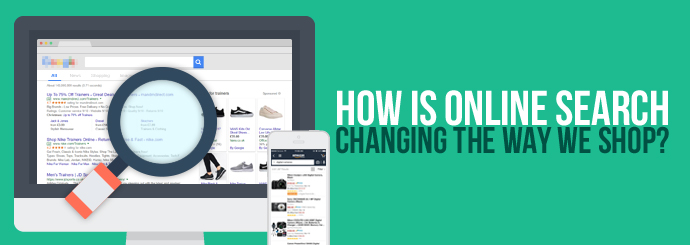
The internet has given us all the expectation that instant gratification can be had at the push of a button, but how impulsive are we when it comes to parting with our money? How has the online search game changed the way we shop?

Well, although it is much easier now to shop online than it is to elbow your way through in-store January sales, many will still choose to research a product before buying. This will vary between shoppers; some will choose to look at a product in a shop and find it cheaper online, and others will do some online research before going into stores. Either way, online research and instore/online shopping now come in hand in hand and that's something to keep in mind when creating your online marketing campaign.

Here are some of the ways search effects the buying process and what you can do to capture this traffic: 

Online Inspiration

People want, but they don't always know what they want. It's human nature; we get an idea but we want to know what everyone else is doing before making a final decision. So to start the research process we turn to a search engine; "cool room inspiration", "Secret Santa ideas", "hair inspiration", sound familiar?

With so many options to browse through its no wonder that people look online for ideas when they at a loss as to where to start.

Pinterest has built its empire on people's desire to be inspired. Losing the need for any written information, this visual platform gives us everything we need to get inspired all in one place. Social media is a great way to capture customers in their research stage. For visual inspiration, Pinterest and Instagram are great. To extend your reach and try to inspire those who didn't know they wanted to be inspired, Facebook and Twitter are very helpful too. Use hashtags to appear on relevant searches and capture this attention.

For more product specific searches, such as "flooring inspiration" a blog is a fantastic way to inspire and inform at the same time. Blogs are a vital way of not only inspiring customers but also for getting them to the products you actually sell, which is often where social media can fall short. 

Relevant, well-ranking blogs don't only attract organic website traffic, they can also give the customer examples of options they can get from you. Although they still may not be ready to make an actual purchase, your brand will be in their mind when they do.

Research and Rethink 

We want answers and we want them now, and luckily it's actually as easy as that. Of course, the internet is full of bias and misguided articles, but we still seem to trust a lot of what Google tells us. For instance, let's look at two of the biggest searches from the Christmas period:

"Which is better, Android or Apple smartphones?"

"Should I get an Xbox or a PlayStation?"

So following my initial search of "which is better, Android or Apple smartphones", Google gives me three relevant, recent articles. However, none of which give me my answer in the visible description, I could click but with my need for instant gratification my eye quickly goes to the "People also ask" snippet which gives me an instant answer: 

The top result in the snippet box actually seems a lot more bias, with a leading question of "Is an iPhone better than an Android". It seems like the same question I asked originally, but before i've even read the description it gives me the impression that Apple has the edge, later confirmed by the description, so I don't even need to read the full article. Despite this being an older article than the top result, it answers my question quicker. 

Without even searching for my next question, Google anticipates that I'm also needing advice regarding my Xbox/PS4 dilemma, another 2016 article lets me know that PlayStation comes out on top. So there we go, I'm getting an iPhone and a PlayStation 4 for Christmas (lucky me, right?). 

Of course, it's not as simple as that, many people will do further research before parting with the money particularly for these pricey items. Which is exactly why blogs are still so important for capturing organic traffic for those who do want more information.

However, it does highlight how important Google featured snippets have become, which is why we have previously written a blog about how to capture a snippet. With any of these products, a large part of it is personal preference, but for those with no opinion formed already, search research may be the thing that swings them either way. 

It's important to find out what your target audience is trying to research and create useful content that answers their questions, remain informative and interesting to get your opinion across - and do it quickly.  

Browse before you buy

In a way, search does also make the selling process far more competitive than when people shop in person. Although you may be able to find a product a couple of quid cheaper somewhere else, half the battle is won by the time you're in the store. Often, it's easier to be slightly unaware that a product is available for a couple pounds cheaper in a different store than to physically go store to store checking, and having to go back to find wherever the cheapest one was. 

But that's easy to do online so can make all the difference. It takes seconds to whip out your mobile phone and find out where to find the cheapest deal can be found. Amazon even makes a point of pointing out to you that you can find it cheaper somewhere else, which is great for me as a consumer as I look for that new PlayStation 4 of mine: 

Now I can see the cheapest option, the reputation of the seller and the delivery cost. If I'm quick I can pay a bit extra and get it tomorrow - instant gratification indeed.

Clearly, this puts pressure on ecommerce websites who now need to stand out in an over-saturated online market. Be sure to compare your prices and deals with your competitors, ask yourself: How much am I charging for my product/service? Is it still a good deal after delivery? Does my website make the product/service stand out from my competitors?

We recently did a blog on how to make your ecommerce website stand out, which you may find helpful. You can find it by clicking here

In Conclusion

The way we research online before means that creating relevant content is more important than ever to not only attract traffic to your website but to inform potential customers that what you're selling is worth buying, whether they buy from you instore or online.

Inspiring them to aspire to have your product/service is the first step, then its time to explain why you're the best place to make that purchase. Keep an eye on your competitors, the quality of your website and products, and what your customers need from you in order to make the most of search

If you want any advice on your online marketing, from website design to SEO we can help. Contact us today to get help from our friendly specialists.

SEO Tips for Ecommerce Websites

SEO for ecommerce websites can be a challenging feat. Building a long lasting SEO strategy that delivers results for your online business requires a lot of constant work and it can be daunting even to the most experienced of ecommerce websites. It's especially challenging when you consider that every ecommerce site is trying to improve SEO rankings for all of their products too. It's even more daunting when you consider your competitors are implementing the same ecommerce SEO tips to grab customers. Thankfully, there's a reason for this; following these tips all work! 

Ranking on page 1 of Google or Bing is not as simple as it might sound - especially if your products are very popular e.g. mobile phones. Improving your website's SEO ranking may seem impossible, but with a little work and effort, you should hopefully see your website grow and get more traffic. 


The fundamental requirements to rank well are a high-quality, user-friendly, very fast and mobile-friendly website. Once you have these in order, you can then utilise the following techniques to improve your ecommerce website SEO. With that being said, let's dive into our SEO tips for ecommerce websites:

If your website is built on an old platform, loads slowly or is not secure, then you need to address these issues before wasting time trying to optimise your site any further. Here are some tools for testing the quality of your website:

Now, let’s go ahead and assume you have a good quality ecommerce website and you just want to focus on the further optimisations. Below you will find our ecommerce SEO tips that will help improve your SEO ranking. 

Research and use unique keywords per page

You can and should research keywords for your industry, products, services, etc. Find out how your potential customer searches for your products or service by utilising tools like:

Once you have your list of keywords it’s a good idea to map each keyword phrase to a specific page on your eCommerce website. For this, we would recommend that you use a spreadsheet as it can get lengthy and disorganised unless in some sort of manageable order. 

Now, a big no-no in the world of optimisation is duplication, whether that’s duplicate paragraphs or just duplicate keywords. If you’re targeting the same keyword with multiple pages then Google will likely choose to only display one of those pages in the SERPs (Search Engine Results Page), which may mean you miss out on opportunities to be seen. Look for unique opportunities to target search terms. Targeting unique and specific phrases is an easy way to avoid duplicates and improve your ecommerce SEO.  

For example, let’s say that you have an ecommerce website that sells safety harnesses. You could just label all of the products a “safety harness” and still be factually correct, but the chances are you likely have a “Climbing Harness”, a “Rescue Harness”, a “Fall Arrest Harness” and so forth. Therefore, in order to capitalise on a wider number of searches, you should first find out how your customers search for safety harnesses. Look at how they phrase their search and even the types of questions they ask surrounding that product. The next step is to make sure you address each of those searches with a page for that product, using the keyword phrase that you’ve identified. 

I know the question you’re about to ask... in those examples, isn’t the word harness repeated? Well-spotted. Yes, it is, but rest assured that Google is not that pedantic and will be able to tell the difference in your meaning (they’re quite clever in that way). Duplication is usually picked up from repetition of the same words in the same format. So, if you try to rank 2 pages for the keyword “Rescue Safety Harness” then you would be better off setting the copy on one page as “Confined Space Harness” and the other as “Rescue Safety Harness”. This way, Google will see the difference and potentially rank both pages, whereas if both are just set as the latter then it is highly likely that only 1 of those pages will be indexed. Not only do you avoid duplication, but you also give your customers more accurate search terms. Google and Bing prioritise accurate web-pages that fulfill the searcher's needs, so by providing specific pages without duplication is a great way to improve SEO rankings and keep your customers happy! 

Ecommerce websites quite often have hundreds of pages for each of their products, so this may seem like a tedious task. However, you should see this as an opportunity to rank for hundreds of different keywords. If you optimise your copy well enough, you may find your website reaches first page positions for a wide range of searches, which will result in much higher volumes of traffic.

Depending on the amount of copy on the page, it is usually recommended to stick to just one keyword per product page. This will allow you to target that keyword more efficiently, than if you were attempting to target multiple keywords at once. If you are instead writing a category page or a home page which usually has more content, you can try to target 2 or 3 keywords if you feel it’s necessary.

Ensure every page has a unique title tag/meta description

When looking at the SERPs, your title tag is your first opportunity to get your consumers attention. The meta description is then the snippet of information which will convince your consumers to click through to the website. This is why it is so important to get these aspects right to improve ecommerce SEO. 

Google specifies that it is ‘important to have distinct, descriptive titles for each page of your site’. This is because it needs to be clear to the consumer what that page entails and shouldn’t be too similar to a page displaying an entirely different product. It is also important to try and include your chosen keyword in your page title and meta tag as this will clearly show Google what your page is about. 

Google recommends branding your titles with your company name, but this is optional and certainly doesn’t have to be done on every page. We recommend including this at the end of the title if you have enough space for it (we recommend no more than 63 characters including spaces), and also separate it with a delimiter such as a hyphen, colon or pipe. This means a good title tag will look something like this:

SEO Tips for Ecommerce Websites | Designer Websites

Your meta description also needs to clearly explain what your page is about in a couple of sentences. In previous years, meta descriptions were only allowed to be around 160 characters before they were truncated by Google. Now, new SERP changes mean meta descriptions can now be displayed up to 278 characters. This should be more than enough length to include at least one instance of your keyword and create a unique and concise description of the contents of the page. 

Utilise an integrated blog to improve your SEO rankings

A blog on your e-commerce website is not only good for keeping your customers updated, it’s a great way to target more keywords. When you’re planning each page of your website and choosing unique keywords, there are sure to be a few that don’t make the cut. These can be targeted with blog posts. Blogs are also ideal for responding to trending topics such as news stories without updating the whole of your website. It's important to note search engines particularly respond well to accurate and recent data. Do not underestimate how much keeping a blog for your eCommerce site and improve your website's SEO ranking. 

Plan ahead and write blog posts around these keywords in an attempt to bring more users through to the website. Try to provide informative content which will help your customers in some respect. This will not only help bring customers to the website, it will also create a level of trust between your company and the consumer. Trust is a great way to improve SEO rankings of web-pages. The more reliably you can answer a customer's query, the more trust and authority your web-page will get, which will improve your SEO ranking. We know it's a lot to produce weekly, even daily content on a blog, but there's a reason it's a tried and tested way to improve eCommerce SEO. 

Another way blog posts can be utilised is to try and achieve the ‘featured snippet’ on the Google SERPs. Even if you’ve not heard of featured snippets before, you’ve most likely come across one. This is the result that usually appears at the top when you ask google a question.

Here’s an example:

To achieve a featured snippet, you need to answer the question better than anyone else. It needs to be clear to Google that you have answered the question as accurately and concisely as possible. That means getting straight to the point and no filler writing (or keyword stuffing).

Featured snippets have been referred to as search position #0 as they come above the search position #1. It has also been found that achieving the featured snippet can increase traffic to your ecommerce website by as much as 500%, in some cases.

Utilising your blog to target keywords and attempt to achieve the featured snippet is a great way of increasing traffic to your website and improving your SEO ranking.

We hope these SEO tips for ecommerce websites have helped you plan your next steps in the digital marketing world. If you are looking for professional help with your ecommerce website, then please get in touch anytime.