
Tag: seo-tips

serp seo

When it comes to implementing keywords into your site copy, blog content and social media, knowing where to start can be a headache in itself - particularly if you don’t have a good keyword research tool to help get the wheels in motion.

Sadly, many of the best keyword research tools are paid, subscription-based services – which is all well and good for big companies that can afford it, not so great for Aunt Lily and her humble, home-made cupcake business.

Luckily, help is at hand. More specifically, help is directly in your hands!


What is SERP?

Okay, first things first, let’s go back to basics – what does SERP stand for?

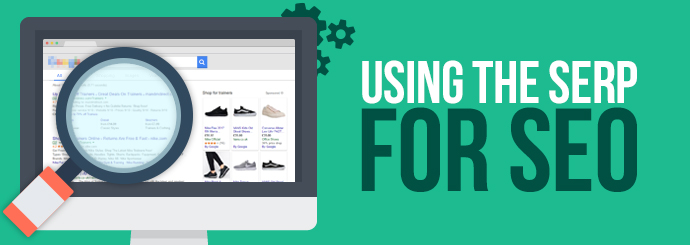
SERP is an acronym for “Search Engine Results Page”. This is where the web results of your search term will be displayed in list form, ranked by their relevance to what you’re looking for. This is also typically accompanied by additional paid ads that also relate to the terms you searched.

A high-ranking, keyword-rich site page, blog or post will, in theory, climb the SERP rankings and sit high on the list. Meanwhile, unoptimised text will find itself relegated to darkest depths of the bottom pages – where no man wants to be.

Think of your site as a magazine on a newsstand. Great SERP SEO will see your site taking pride of place, proudly displayed front and centre for all to see. Meanwhile, poor SEO would be akin to stuffing it at the very back of the top shelf, hidden behind a couple of dusty, old blue mags.


Using SERP to optimise content

To keep your content from dancing in the dark like an uncoordinated extra in a high school musical, it’s important to keep your SEO skills sharp. This will help shine a spotlight on your content and bump it up to the main stage of the top results pages.

How do we do that? We’re glad you asked! Some of the most relevant keywords and phrases are available literally at your fingertips – you just need to know where to look.


SERP-rising results

The art of manipulating SERPs is a great way to make Google do the all the leg work when it comes to SEO research. Better still, the process itself is virtually effortless.

Finding great keywords that are relevant to your subject matter can be as easy as hitting the “enter” key. Simply run a Google search for a term relative to your needs and watch nature take its course.

This process can instantly return a myriad of keywords and phrases that have already passed the Google green-light, leaving them ripe for the picking.

Say, for example, you run a dog food business. Typing “cheap dog food” into Google will immediately spit out a bowlful of meaty SEO results dripping in keyword Marylebone jelly.

Follow these three easy SEO tips to keep your content standing tall as top dog.


"People also ask"

The “People also ask” box is typically found towards the top of the results page when you enter your search requirements.

So, using the example of your fictional dog food business, a search for “cheap dog food” would return relative search questions along the lines of “What is a good dog food?”, “What is the best cheap dog food?” and “How much does a dog cost a month?”.

These terms can make for excellent headings in your blog and logical H2s that won’t seem forced. The queries are relevant, the subject matters are ideal and the answers can be seamlessly weaved into your content in a manner that also naturally promotes your product.

For example, if you were to include “What is a good dog food?” as a H2 in your blog, you could easily relate the accompanying content back to your products in smooth transition by saying:

“A good dog food should include a variety of key canine nutrients. Mut Mix 2000 includes all the vitamins and minerals your furry friend needs for a healthy, balanced diet.”

This way your copy remains relevant, you’ve plugged your product nicely and still included the keyword phrase in a high-profile position as a H2. Hot dog!


"Searches related to"

Much like the previous section, another great area of inspiration is the “Searches related to” list. This can be found at the bottom of the SERP, comprising of eight similar searches related to your topic of choice. This is essentially a mini list of searches that Google believes the user may find helpful, should they wish to expand on their search.

The results can range from alternate searches to more detailed queries into the same term; for example, that “cheap dog food” search could return “cheap dog food online” or “dry dog food” in the “Searches related to” section. As Google has already identified these terms as relevant to your search, they logically warrant inclusion in your copy.

Meanwhile, the octet of “Searches related to” results can also provide businesses with valuable market research of what your customers are actively looking for in relation to a product. Related searches – such as “cheap dog food 15kg” and “cheap dog food in bulk” – give an insightful glimpse into what your target audience wants, as well as their buying habits, so it’s worth keeping that in mind if you don’t already provide such products.


"People also search for"

This next batch of insider info is a little trickier to come by as it doesn’t immediately appear in your search results; however, it’s still fairly straight-forward to access.

Simply type in your search term and click on one of the relevant results. Once through to your site of choice, navigate back to the SERP to trigger the “People also search for” box. This should now appear below the aforementioned site listing in the SERP.

This box typically includes six highly relevant results that mirror your search and, by proxy, mirrors the behaviour of your customer/target audience. This is very similar to the “Searches related to” list yet still a useful and insightful tool nonetheless.

If patience isn’t your strong suit and bulk lists are what you’re after, there a number of programmes, plug-ins and extensions readily-available online that enable you to simply extract the list of “People also search for” phrases in one go (such as this). These allow you to effectively harvest these lists for SEO purposes without the need to meticulously scour Google.


So, there you have it: three easy ways to optimise your content at the click of a mouse without parting with a penny. For more SEO tips, check out our Simple SEO Tips for 2019 or drop us a line using the button below.
Get in Touch

seo tips 2019

For any business that relies heavily on web content and online activity, the importance of SEO cannot be overstated.

Poor SEO can make even the most engaging content underperform and, in some cases, seem virtually invisible to the outside world.

Think of it as painting the world’s most beautiful picture…on the underside of a chair. Regardless of how brilliant it may be, what good is it if no-one can see it?

On the other hand, top-notch SEO tactics can see your website soar, clocking up more traffic than the M25 in rush hour – so its well worth keeping abreast of the trends.

Luckily, here at Designer Websites, we have a few handy hints and tips to ensure your content doesn’t get lost in the shuffle this year, allowing your site to get the love and attention it deserves.


Google Algorithm for SEO

When it comes to SEO performance, much of your site’s success hinges on the Google algorithm – Google’s way of determining how to rank web pages. If your content plays nicely with the GA, the higher in the rankings you will be; if it doesn’t – sayonara.

To make matters even more complicated, the guys and gals at Google HQ love to keep us on our toes by throwing the odd SEO curve ball our way. In fact, for SEO strategists, it's fair to say that Google has thrown more spanners in the works than an angry mechanic on the verge of a meltdown.

Over the course of a year, it’s not unusual for G-Team to make over 500 changes to the Google algorithm, proving that their algorithm is a dancer and a damn hard one to keep up with on the digital dance floor.

Typically, 2019 is no different. That’s where we come in…


What is the Best SEO Strategy for 2019?

With so many changes to the algorithm throughout the year, creating content that abides by the wants and needs of Google can be like trying to appease a hysterically crying baby.

Does it need its content changed; does it want to be fed with more delicious keywords; or shall I just throw the laptop in the car, take it for a drive around the block and hope it goes to sleep?

Before you completely lose your mind to an SEO migraine, take a handful of these healthy hints to help you shake off the stress and stay ahead of the curve.


1. Back to basics

There are a number of tech-savvy ways you can optimise your website to perform at a high level, from adding breadcrumbs and prioritising pages in your site navigation to implementing tracking and making your site mobile friendly.

However, when it comes incorporating SEO friendly content to your site – such as blog posts, web copy and product descriptions – there are a few simple tactics that can have a profound effect on performance, without the need for an IT degree.

Before you tackle the nitty gritty, make sure the following basics have become second nature.


Keywords and phrases

Keywords and phrases are naturally the starting point for most SEO strategists. Once you’ve uncovered the best performing keywords for your subject, be sure to incorporate these organically into your copy, including your titles, headings and alt text when relevant.

Interlink with anchor texts

It’s also a good idea to interlink web pages within your site using anchor texts. Links are a crucial factor when it comes to page rankings; internal links to other pages on your site can help spread link equity and prolong site view times.

Optimising images

Compressing and optimising images within your pages can also increase your site speed. Slow loading times can have a negative effect on conversions and, by proxy, a negative effect on SEO. The quicker the site speed, the more likely you are to retain your visitor.


2. Fit for re-purpose

If your back catalogue of content runs deeper than the Coronation Street archive, you could be sitting on a goldmine of useful blogs and copy. After all, why let all that history go to waste – especially if the content is still relevant.

Recycling content can be a great way to make the most of what you already have. Updating pre-existing copy to include new keywords and updated information can instantly make it relevant again, enhancing the performance as a result.

Alternatively, you could repackage your text in the form of a video – which brings us nicely to our next top tip…


3. Video killed the SEO star

For content providers, video is the ultimate ace up the sleeve for SEO in 2019 and beyond. If you’re not already a dab hand with a digital camera or a wizard with Adobe Premiere Pro, now is the time to knuckle down and sharpen those skills.

According to veteran tech kings, Cisco, online video is set to grow exponentially in the coming years, with projections indicating that video will account for over 80% of all consumer IP traffic by 2022. In light of that info, neglecting video wouldn’t just be bringing a knife to a gunfight, it’s veritable content suicide.

Bulletproof your content by integrating video across your site, while you can also bolster existing videos by updating the titles and descriptions to ensure they remain SEO relevant. Meanwhile, optimising audio/video quality can enhance the user experience, further endearing your site to the gods of SEO.


4. SERPs up, man!

Whether you’re penning something completely new or attempting to breathe life into old content, Google itself can be a great resource for keywords and phrases.

If you’re looking to rank for a particular term, Google it and check out the search engine results page in the “People also ask” box for insight on things to include in your content.

Similarly, keep an eye on the “Searches related to…” results at the bottom of the page. Both are great ways to cherry pick a few golden terms for H1s and H2s.

Think of it as a being sat next to the smart kid during a particularly tough test; all the answers are there for the taking, it’s up to you if you take a look and use them.


5. Go evergreen with authority

According to Worldometers, well over 4 million blogs were posted via WordPress.com on the day this very blog was written. Multiply that by 365 and that’s a whole lotta content to compete with in 2019.

Needless to say, online content is quickly become an extremely crowded arena, suffering from the effects of over-saturation.

The dramatic rise in content competition has naturally hindered performance, while changes to social media have also seen sharing figures drop dramatically in recent years. However, you can avoid these pitfalls by actively taking your content in a different direction.

Evergreen content is essentially content that maintains its relevance over time, immune from becoming dated (a fact ironically stated in a blog titled “SEO Tips for 2019”). Keep your content from becoming yesterday’s news and tomorrow’s garbage by creating authoritative content that lasts.

Quality evergreen content based on research and reference has been proven to gain backlinks, building traction over time and ranking higher as result. Originality backed by linked references could well be your ticket to the big time.


So, there you have it – five simple ways to ensure your SEO content in 2019 is A-OK, not DOA.

For more information on how to become an SEO VIP, click here or hit the button below to get in touch.

Contact Us!


Why won't my website show up on Google?

It's frustrating when your website can't break onto the first page of Google results for that high-volume search term you've been trying to target, but it's even more frustrating when your website isn't showing up on Google at all.

SEO Tips for Ecommerce Websites

SEO for ecommerce websites can be a challenging feat. Building a long lasting SEO strategy that delivers results for your online business requires a lot of constant work and it can be daunting even to the most experienced of ecommerce websites. It's especially challenging when you consider that every ecommerce site is trying to improve SEO rankings for all of their products too. It's even more daunting when you consider your competitors are implementing the same ecommerce SEO tips to grab customers. Thankfully, there's a reason for this; following these tips all work! 

Ranking on page 1 of Google or Bing is not as simple as it might sound - especially if your products are very popular e.g. mobile phones. Improving your website's SEO ranking may seem impossible, but with a little work and effort, you should hopefully see your website grow and get more traffic. 


The fundamental requirements to rank well are a high-quality, user-friendly, very fast and mobile-friendly website. Once you have these in order, you can then utilise the following techniques to improve your ecommerce website SEO. With that being said, let's dive into our SEO tips for ecommerce websites:

If your website is built on an old platform, loads slowly or is not secure, then you need to address these issues before wasting time trying to optimise your site any further. Here are some tools for testing the quality of your website:

Now, let’s go ahead and assume you have a good quality ecommerce website and you just want to focus on the further optimisations. Below you will find our ecommerce SEO tips that will help improve your SEO ranking. 

Research and use unique keywords per page

You can and should research keywords for your industry, products, services, etc. Find out how your potential customer searches for your products or service by utilising tools like:

Once you have your list of keywords it’s a good idea to map each keyword phrase to a specific page on your eCommerce website. For this, we would recommend that you use a spreadsheet as it can get lengthy and disorganised unless in some sort of manageable order. 

Now, a big no-no in the world of optimisation is duplication, whether that’s duplicate paragraphs or just duplicate keywords. If you’re targeting the same keyword with multiple pages then Google will likely choose to only display one of those pages in the SERPs (Search Engine Results Page), which may mean you miss out on opportunities to be seen. Look for unique opportunities to target search terms. Targeting unique and specific phrases is an easy way to avoid duplicates and improve your ecommerce SEO.  

For example, let’s say that you have an ecommerce website that sells safety harnesses. You could just label all of the products a “safety harness” and still be factually correct, but the chances are you likely have a “Climbing Harness”, a “Rescue Harness”, a “Fall Arrest Harness” and so forth. Therefore, in order to capitalise on a wider number of searches, you should first find out how your customers search for safety harnesses. Look at how they phrase their search and even the types of questions they ask surrounding that product. The next step is to make sure you address each of those searches with a page for that product, using the keyword phrase that you’ve identified. 

I know the question you’re about to ask... in those examples, isn’t the word harness repeated? Well-spotted. Yes, it is, but rest assured that Google is not that pedantic and will be able to tell the difference in your meaning (they’re quite clever in that way). Duplication is usually picked up from repetition of the same words in the same format. So, if you try to rank 2 pages for the keyword “Rescue Safety Harness” then you would be better off setting the copy on one page as “Confined Space Harness” and the other as “Rescue Safety Harness”. This way, Google will see the difference and potentially rank both pages, whereas if both are just set as the latter then it is highly likely that only 1 of those pages will be indexed. Not only do you avoid duplication, but you also give your customers more accurate search terms. Google and Bing prioritise accurate web-pages that fulfill the searcher's needs, so by providing specific pages without duplication is a great way to improve SEO rankings and keep your customers happy! 

Ecommerce websites quite often have hundreds of pages for each of their products, so this may seem like a tedious task. However, you should see this as an opportunity to rank for hundreds of different keywords. If you optimise your copy well enough, you may find your website reaches first page positions for a wide range of searches, which will result in much higher volumes of traffic.

Depending on the amount of copy on the page, it is usually recommended to stick to just one keyword per product page. This will allow you to target that keyword more efficiently, than if you were attempting to target multiple keywords at once. If you are instead writing a category page or a home page which usually has more content, you can try to target 2 or 3 keywords if you feel it’s necessary.

Ensure every page has a unique title tag/meta description

When looking at the SERPs, your title tag is your first opportunity to get your consumers attention. The meta description is then the snippet of information which will convince your consumers to click through to the website. This is why it is so important to get these aspects right to improve ecommerce SEO. 

Google specifies that it is ‘important to have distinct, descriptive titles for each page of your site’. This is because it needs to be clear to the consumer what that page entails and shouldn’t be too similar to a page displaying an entirely different product. It is also important to try and include your chosen keyword in your page title and meta tag as this will clearly show Google what your page is about. 

Google recommends branding your titles with your company name, but this is optional and certainly doesn’t have to be done on every page. We recommend including this at the end of the title if you have enough space for it (we recommend no more than 63 characters including spaces), and also separate it with a delimiter such as a hyphen, colon or pipe. This means a good title tag will look something like this:

SEO Tips for Ecommerce Websites | Designer Websites

Your meta description also needs to clearly explain what your page is about in a couple of sentences. In previous years, meta descriptions were only allowed to be around 160 characters before they were truncated by Google. Now, new SERP changes mean meta descriptions can now be displayed up to 278 characters. This should be more than enough length to include at least one instance of your keyword and create a unique and concise description of the contents of the page. 

Utilise an integrated blog to improve your SEO rankings

A blog on your e-commerce website is not only good for keeping your customers updated, it’s a great way to target more keywords. When you’re planning each page of your website and choosing unique keywords, there are sure to be a few that don’t make the cut. These can be targeted with blog posts. Blogs are also ideal for responding to trending topics such as news stories without updating the whole of your website. It's important to note search engines particularly respond well to accurate and recent data. Do not underestimate how much keeping a blog for your eCommerce site and improve your website's SEO ranking. 

Plan ahead and write blog posts around these keywords in an attempt to bring more users through to the website. Try to provide informative content which will help your customers in some respect. This will not only help bring customers to the website, it will also create a level of trust between your company and the consumer. Trust is a great way to improve SEO rankings of web-pages. The more reliably you can answer a customer's query, the more trust and authority your web-page will get, which will improve your SEO ranking. We know it's a lot to produce weekly, even daily content on a blog, but there's a reason it's a tried and tested way to improve eCommerce SEO. 

Another way blog posts can be utilised is to try and achieve the ‘featured snippet’ on the Google SERPs. Even if you’ve not heard of featured snippets before, you’ve most likely come across one. This is the result that usually appears at the top when you ask google a question.

Here’s an example:

To achieve a featured snippet, you need to answer the question better than anyone else. It needs to be clear to Google that you have answered the question as accurately and concisely as possible. That means getting straight to the point and no filler writing (or keyword stuffing).

Featured snippets have been referred to as search position #0 as they come above the search position #1. It has also been found that achieving the featured snippet can increase traffic to your ecommerce website by as much as 500%, in some cases.

Utilising your blog to target keywords and attempt to achieve the featured snippet is a great way of increasing traffic to your website and improving your SEO ranking.

We hope these SEO tips for ecommerce websites have helped you plan your next steps in the digital marketing world. If you are looking for professional help with your ecommerce website, then please get in touch anytime.