Should You Outsource Digital Marketing Strategy

Marketing your business online is a multifaceted task that often takes place across many different platforms. Nowadays, a typical digital marketing strategy might include any or all of the following:

  • Responsive website (fast, mobile friendly, optimised for search engines)
  • Conversion optimisation (tweaking content and layout for performance)
  • AMP development (faster mobile pages)
  • Blog posts and other content (including infographics, videos, etc.)
  • Social media (Twitter, Facebook, Pinterest etc.)
  • PR and link outreach (e.g. articles, external blog posts)
  • PPC advertising (e.g. Google AdWords, Bing Ads)

You may also choose to combine the above strategies with more traditional avenues such as TV, radio and/or print advertising.

With the fight happening on so many different fronts, it's not hard to see why a lot of business owners decide to outsource some or all of their marketing to external agencies. Indeed, it's not uncommon to hire a different firm for each task: one company to design your website, another to write engaging content for your blog, another to handle your AdWords campaigns, and so on.

But is this a good way to get results?

The obvious benefit of this approach is that it allows you to hire a specialist for each part of your multi-platform digital marketing effort. You want a professional-looking website, so you hire an experienced web developer who's capable of providing this. You want to get your brand name in front of more people, so you pay a highly-rated PR agency to get the word out on your behalf. Nobody in your organisation knows the first thing about Google AdWords? No problem - hire a PPC expert to set up some campaigns for you.

On the face of it, then, choosing the best person or company for each job on a task-by-task basis seems like a pretty sensible tactic. The problem is that while PPC advertising, SEO copywriting, website design, et cetera are all distinct disciplines that require very different skillsets, they don't exist independently of one another. All digital marketing platforms are intrinsically linked, and trying to separate them all out can cause a lot of headaches.

Here are some examples:

  • Search engine optimisation (SEO) is a critically important part of website development that ideally needs to be taken into consideration at the planning stage. When building a new online home for your business, you might be tempted to hire a designer to create the website itself, then turn the project over to an SEO expert who can select the keywords and write the copy for each page. As a general rule, though, you'll definitely get far better results in the end if your website developer has a strong working knowledge of SEO too - that way, they can make suggestions from the get-go and help you to construct a highly-optimised site hierarchy instead of just hashing in some keywords as an afterthought. Optimising a website is significantly more than just content and keywords - it’s having a modern and responsive site architecture, handling URLs properly, hosting the website in a way that make it fast for the end user, and so much more!

  • If you're thinking of using Google AdWords to drive extra traffic to your website, you may be wondering exactly how much each click will cost you once your ads are up and running. The answer to that question depends on many different variables, but more than any other factor, the amount you pay when somebody clicks on one of your ads is determined by its quality score, which is derived from the combination of keyword, advert and landing page. The lower your quality score, the more you'll have to pay for each click (since Google don't like sending their users to irrelevant or low-quality web pages). But your average PPC manager can't achieve a good quality score just by fiddling around in AdWords - it requires collaboration between your web developer, copywriter and PPC manager to get those ads and landing pages just right.

  • Finally, let's imagine that you've hired a social media guru to grow your audience on Twitter, Facebook, Instagram, and so on. In order to craft successful social campaigns and keep your accounts running smoothly, that person will have to co-ordinate their efforts with the person who writes your blog posts, the person who handles your PR, and possibly several other parties like your web developer, your sales team, and whoever is responsible for determining the overall direction of the company. That's a lot of plates to keep spinning!

The point is that - as the old proverb goes - too many cooks sometimes spoil the broth, and dividing up your marketing efforts can hugely diminish your results. Assigning each task to a different specialist opens you up to a lot of potential problems, especially if any of your marketers cannot see:

  • Accurate sales and traffic figures for your business
  • The growth plans you have in place
  • What everyone else is working on

Of course, there are numerous tools and pieces of software that can be used to co-ordinate several groups of people who are all working towards the same goal, but these solutions tend to only work as well as the people using them. No matter how you slice it, trying to synchronise half a dozen different agencies and get them all reporting back to you in perfect harmony can be a huge and frustrating task!

So is there a better way?

A simpler route to digital marketing success

You want to make life simple for yourself, but you're still keen to check all the digital marketing boxes and get your brand seen in as many different places as possible. How do you achieve both of these goals? Well, you could try one of the following:

1) Hire in-house marketing talent.

Instead of outsourcing your marketing efforts to external agencies, you may decide to hire your very own PPC expert, SEO guru, social media manager, etc. That way, all the necessary skills will be in your own office and on your own payroll.

The drawback: Hiring your own marketing team will cost a lot of money and use up a lot of time. You'll have to do all the legwork - posting job ads, looking through CVs, interviewing applicants - yourself, and if you're hiring several people, you'll have to do it all multiple times. Successful candidates might need to be trained up, and they may take some time to properly settle into your organisation.

And that's assuming you can even find the talent you need. Unfortunately, most skilled digital marketing professionals would rather work for an agency (where they would get to work on a variety of different projects) than for an ordinary business (where they would have to the same thing every day). If you do choose the in-house route, you may find that scouting out a suitable candidate for each position is harder than you expected!

2) Find an agency that does everything.

Hiring an agency means that you don't have to face the hassle of recruiting new employees for your own company, and if you can find an 'all-in-one' digital marketing agency who know how to craft engaging content, build successful AdWords campaigns, get seen on social media, AND design a winning website, this will also make it far easier for you to keep your digital marketing efforts tidy, efficient and effective.

The drawback: Marketing agencies that do everything are hard to come by. It's fairly easy to find a company that's great at SEO, or at social media, or at pay-per-click advertising, but finding a company with the skillset and vision necessary to do it all - and do it well - can be quite a challenge.

Additionally, some business executives may be reluctant to put all their eggs in one basket by entrusting absolutely everything to a single company. Will they be vigilant, honest and communicative when it comes to reporting back and keeping you in the loop? And what if this other company were to go under? Where would that leave you, the client?

Clearly, both of the above approaches have their pros and cons. But there is a third option: simply take a little from column A and a little from column B.

3) Hire a skill-rich agency and your own marketing executive.

First, you hire a talented person to serve as your company's internal marketing executive. This person will need to have great communication and planning skills, along with a good deal of digital marketing experience, but they don't necessarily need to be an expert on everything. They won't necessarily be the one setting up AdWords campaigns and tweeting the latest blog posts - their main role will be to co-ordinate your overall marketing strategy and communicate with the people carrying it out.

Once your new recruit is in place and the two of you have come up with a digital marketing plan that identifies goals and highlights key areas of priority, the next step is to find a digital marketing agency that's capable of delivering on your aspirations. You should still look for a company with a diverse array of skills at their disposal - after all, our original point about the multifaceted nature of modern marketing still stands - but since your internal marketing executive will be working closely with the external marketers, you don't have to worry about drifting out of the loop.

This approach is superior to the others for a number of reasons. Yes, you'll still have to interview, hire and orient a new employee, but it's just one person rather than a whole team. Yes, you're still entrusting much of the actual work to an external company, but it is just one company - which should keep things relatively straightforward - and you'll have a dedicated employee of your own to hold them to account, answer any questions they might have, and track their progress to ensure that your overarching marketing strategy is moving in the right direction.

Internal Marketing Executive - Responsibilities:

  • Planning overall marketing strategy
  • Coming up with new ideas for the company
  • Acting as a point of contact for external marketers (and providing them with extra info if needed, e.g. photos, videos, sales figures)
  • Ensuring that all work is completed to a high standard and in a timely manner
  • Using analytics tools to track progress of marketing campaigns
  • Keeping you in the loop

External Marketing Agency - Responsibilities:

  • Putting your marketing executive's vision into practice (this could mean anything from scheduling Facebook posts to contacting journalists or creating and managing PPC campaigns)
  • Making additional suggestions that will boost your company's profile
  • Monitoring / analysing progress and results
  • Reporting back to the marketing executive

Done correctly, this approach will ensure accountability, straightforward two-way communication, and steady forward progress towards your digital marketing goal.

Designer Websites is a talented team of developers, designers, SEO specialists and digital marketing experts. No matter what you're looking to achieve online, we have the skills to help you do it - contact us today to discuss your requirements.

With billions of daily website views coming from traffic on search engine results pages, SEO (Search Engine Optimisation) is vital to any digital marketing plan. Across the globe, businesses desperately strive to achieve the top spots on Google's SERPs (Search Engine Results Pages) in order to generate the most traffic to their business. However, in order to achieve these positions, it is much more complicated than simply having a fast website or just targeting keywords. With the most popular search engines constantly tweaking and altering algorithms, businesses are constantly kept on their toes in an efforts to master SEO.

There is no quick fix to achieving and maintaining a space on the front page of SERPs (no matter what some dodgy SEO companies may tell you!). It takes a combination of techniques to fully optimise your website. Ultimately your website should be very easy and quick to use, it should contain valuable unique content, it should be hosted professionally, it should properly handle errors, redirects, sitemaps, indexing bots, etc. In fact the list of boxes that your website should now tick is very long indeed, and most of these elements are very technical and will need properly qualified and experienced people to implement them. 

SEO now comes hand-in-hand with user experience optimisation, and Google will no longer accept cheap tricks to get to the top of the results page. Instead, Google explains that"Search engine optimization is about putting your site's best foot forward when it comes to visibility in search engines, but your ultimate consumers are your users, not search engines.With that in mind, when considering how to SEO, below are some things to consider.

Keyword Analysis

Although we’ve already mentioned it’s not the only way to help rankings, it remains a very important part of SEO. It involves researching what people are searching on Google when they’re looking for a service like the one your business provides. Then you can target this traffic by having the keywords appear in all the right sections of your website (such as the title tag, Meta tags, page headings, etc) and ads. 

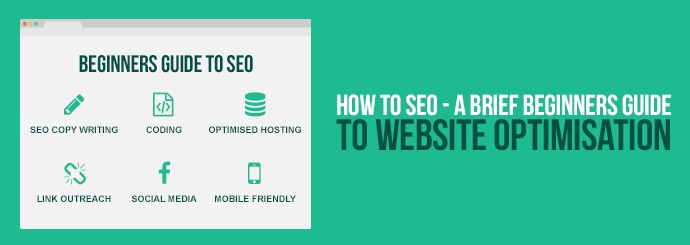
SEO Copy Writing

In the not too distant past, website optimisation experts were often guilty of filling up pages with keyword-rich copy, but these days it's absolutely vital to make your content more user-friendly and readable, but this doesn't mean you forget keywords altogether, it just means you need to work harder to include appropriate keywords, whilst making the content engaging. Copywriting is a balancing act between targeting keywords and providing interesting and useful content for the user. No one wants to visit a website that’s full of useless information, and Google will penalise you for cutting corners. Instead of flooding your copy with keywords, it’s key to maintain readability and an appropriate keyword density.

Coding

To ensure your website can be easily indexed by search engine bots, and that it will run at an optimum speed, it’s important to get your coding correct. You want code-light pages that load very quickly, you need to use the latest compression algorithms, you need to utilise the latest coding standards and include important meta information, rich cards, schema tags, etc. If you want to rank highly across different browsers, your coding has to up-to-date, it has to be responsive to ensure it works on any device, and is cross browser compatible. Avoid template type solutions, or systems where the coding structures are likely to be old and out-dated.

Optimised Website Hosting 

Providing super fast and reliable website hosting is absolutely essential to a well-optimised website, otherwise, all of your other SEO efforts will have been in vain. Correct error handling procedures and redirecting is also really important. You either need a dedicated web server or at least a host who has a very high end dedicated server and holds fewer than 50 websites on it themselves. The speed of the server is significantly more important than it's location, so make sure that the response times are very good. 

Link Outreach/Building

Not to be confused with dodgy link-building of the past – a technique that led to a steady stream of dodgy links spamming the internet (through directories, etc), which is now often branded a black-hat technique. Trying to acquire links synthetically can earn you a Google penalty, which can get you removed from SERPs. However, there is still value in worthy links that are achieved by content creation specialists liaising with site owners. Google still uses inbound links as a part of their algorithm, but now they are more interested in the value of these links rather than the quantity you've amassed. Make sure you avoid any dodgy link building tricks, just focus on networking effectively, and making sure your content is interesting and easy to link to. Ideally, generate content that naturally generates links and shares from real users.

Social Media

With the majority of people checking their social media before they’ve even got out of bed, it’s now more important than ever to make sure your business is within the social matrix. Although there is still some debate about how valuable (if at all) social media is, it's good for brand awareness and potential back links.  By having a well-oiled social marketing plan, you can potentially improve your rankings on the search engine results, so it's worth doing! 

Mobile Friendly Websites

Another development that highlights how SEO is constantly evolving to fit in with the daily lives of users. Search engines such as google value the way your website translates onto other devices such as mobile phones and tablets.


When considering how to optimise a website the above is simply a brief introduction, and is by no means a comprehensive list of techniques. Website optimisation is actually a varied and a constantly evolving process, which requires the expert knowledge of SEO practitioners. Here at Designer Websites, the wealth of experience we have developed over the past decade ensures we understand the technical aspects of website optimisation better than anyone else.

Click here to learn more about our SEO services or request a free quote for our SEO services here today. 

Keyword Cannibalisation

'Cannibalisation' is a very scary-sounding word, isn't it? It certainly conjures up some very grim mental images. While keyword cannibalisation isn't quite as grisly a concept as its name might suggest, it can cause big problems for your website, making it difficult for search engines to identify each page's purpose and potentially dragging down your rankings as a result.

If you're unfamiliar with the idea of keyword cannibalisation, fear not - in this article, we'll talk about what it is, how it happens, and how to rectify it.

What is keyword cannibalisation?

Keyword cannibalisation is what happens when your website contains multiple pages that target the same keyword(s). Ideally, every search term you wish to rank for should be targeted on one page and one page only - otherwise, you're just forcing your own pages to compete with ('cannibalise') one another.

Here's an example of how this might happen. Imagine you own a second-hand furniture shop, and you want your website to be the #1 Google result for the popular keyphrase 'antique furniture'. In order to achieve this, you:

  • Use the phrase 'antique furniture' numerous times on your homepage
  • Dedicate one of your internal category pages to 'antique furniture'
  • Write a blog post all about antique furniture, sharing lots of helpful information for potential customers

This may seem like a strong strategy, but what you're actually doing is making it difficult for Google and other search engines to identify which of your three 'antique furniture' pages they should actually be listing as a result for that query.

Why is keyword cannibalisation a problem?

As mentioned above, the problem with keyword cannibalisation is that those pages with the same keywords will be competing against one another in the SERPs. As a result, some or all of those pages may not rank for your chosen keywords at all, or all may just rank lower than if just one page was targeted. That's an issue, because in spite of the keywords they share, each of the competing pages may actually serve a totally different purpose from its brethren.

Generally speaking, Google will not list 2 or more pages from the same website among its top 10 results for a given query UNLESS the algorithm is pretty certain that the user is looking for that specific website. (For instance, Googling 'eBay toys' will bring up a number of pages from eBay, whereas the top organic results for 'antique furniture' are gathered from a variety of different sites.) Google like to hedge their bets, and in most cases, they've got a better chance of satisfying the user if they show 10 results from 10 different sources rather than taking multiple pages from a single site.

This means that, when Google's crawlers look at your website, you want it to be absolutely crystal-clear which page is best suited to which search term. If you're presenting several different pages as possible responses to the query 'antique furniture', Google will get confused and may pick the wrong page to rank (e.g. a blog post rather than your main 'antique furniture' category, which might have had a better chance of driving clicks and conversions). Worse still, if none of the competing pages particularly stand out from the crowd, they may even decide not to rank any of your pages for that keyword at all.

Here are some other issues that may occur as a result of keyword cannibalisation:

  • Content Quality - It would be difficult to have a plethora of pages on the subject of  ‘antique oak furniture’ (for example) and ensure that each one was made up of interesting, useful and original content. Spreading your content too thinly across too many competing pages will inevitably reduce the overall quality of your website, and when it comes to ranking, unique high quality content beats quantity hands-down. Poor content not only leads to poor user experience, it also leads to high bounce rates and discourages people from sharing pages.

  • External Links - Even if you do manage to make your competing pages share-worthy, you risk splitting your link equity and diluting the search engine 'juice' you receive when other websites link to yours. It's far better to have a single page/resource for each subject you wish to cover, because that way, anyone who links to you will easily be able to identify which of your URLs they should send their users to. If 10 people want to link to a page about 'antique oak furniture', you ideally want all of them to link to the same part of your website - this will have a greater impact on your rankings than dividing those 10 links between multiple destinations.

  • Internal Links - The above applies to internal links, too. Internal links are a big ranking factor; in order to determine the hierarchy of your website (i.e. which pages are most important), Google and the other search engines pay close attention to which of your own pages you link to from other parts of your website, how often you link to each page, and what words you use when you do so. If you've got just 1 page about 'antique oak furniture', you can simply link to that one every time you mention that subject elsewhere on your site. If there are 30 'antique oak furniture' links on your website - 10 to a category page, 10 to a specific product, and 10 to a blog post you wrote - it will be difficult for the bots to ascertain which of those linked pages might make the best result when somebody types 'antique oak furniture' into a search engine.

What can I do about keyword cannibalisation?

If you’re over-using keywords on purpose because you believe it will boost your rankings, we would strongly recommend that you stop right now. Keyword cannibalism often happens by accident, but some site owners, and even some online marketing agencies, mistakenly think that using the same keyword in multiple titles and headings throughout a website will help that website rank better for the cannibalised keyword. As we've explained, though, that simply isn't the case.

Hopefully, you’re now in a position to avoid keyword cannibalisation from the get-go. When creating a website, you can avoid this error by making sure you have thoroughly planned the site architecture. Every page should be detailed, unique, and serve its own distinct purpose. If two of your pages are giving users more or less the same information on the same subject, then one of them is a waste, and likely damaging your rankings. Furthermore, all keywords, titles and header tags should be unique to their page. Once you know what pages you need and what each one's function is, it should be relatively easy to choose the keyword(s) for each page using a tool like Keyword Planner.

If you’ve already got a cannibalisation problem (not to be confused with a real-life cannibal problem, which we unfortunately cannot help with), then it’s time to clean up your pages. Start by going through your website and identifying groups of pages that are targeting the same keyword; then, review each group and pick the ONE page from each that you think best addresses the search term in question. (Tip: take a look at which page currently ranks highest for that keyword on Google - it's probably safe to assume that that page will have the best shot of climbing higher once the cannibalisation issue is resolved.)

Once you've selected one page for each keyword, you have 2 choices regarding what to do with the other cannibal pages:

  • Get rid of them. If the cannibal pages don't actually serve any purpose to the user, the best thing to do is delete them and use 301 redirects to send their URLs to the good-quality page you've chosen to keep. This will mean that any links to the cannibalised pages pass their ranking 'juice' to the good page instead. Anyone who attempts to visit any of the deleted pages in the future will be redirected to the page you kept.

  • Retarget them. If your cannibalised pages are important to the broader user experience on your website, then you can keep them, but what you'll need to do is de-optimise them and target different keywords instead. For instance, let's say that you've decided to use a category page as your landing page for the term 'antique furniture' - that keyword also appears heavily on your homepage, and since you obviously can't delete your homepage, you should instead do a bit of keyword research and identify a different search term to target there. (Perhaps a more generic term that covers your entire offering, rather than just your antique line.)

The golden rule when it comes to keyword cannibalisation is that every page of your website should offer something unique. If every page serves a different purpose, there's little risk of crossover between keywords, page copy, and meta tags because you'll need different words to describe each page's function. Keyword cannibalisation can be a pretty good indicator that you have multiple pages stepping on each other's toes and offering basically the same information/service to the end user - if that's the case, either strip those unnecessary pages out or justify their existence by giving them their own unique focus.

If you need help with your website’s SEO, our team of experts are more than happy to help. Contact Designer Websites now to discuss your requirements.

When most of us want to buy something, find a location, or get the answer to a question, we go to Google, right? We like the results, we’re used to how it works...we even use the word 'Google' as a verb to mean 'search for information about'. No wonder Google is the go-to search engine for the majority of Internet users.

Today, we'd like to take a look at whether this pronounced user preference for Google might wane due to the ever-changing appearance of their results pages, or if - on the contrary - these changes have helped to make the search engine even better. Before we can answer this question, we first need to understand which aspects of Google have changed and the effects of those alterations.

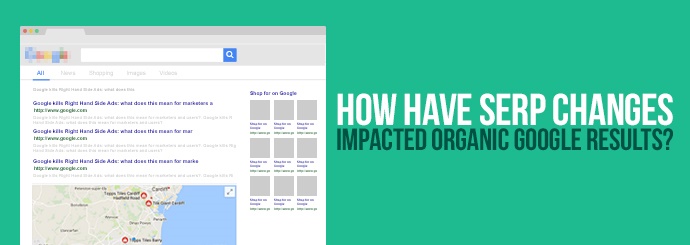
As you probably know, the pages that appear when you search for something in any search engine (Google, Bing, Yahoo, etc.) are known as SERPs (Search Engine Results Pages). Over the past year or two, Google have repeatedly changed the way their own SERPs look, and the compounded effect of their changes - particularly in the last year - has seen the traditional organic results pushed further and further down the page.

In this article, we’ll attempt to assess the impact of the changing face of the Google SERPs on organic results.

So How Have Things Changed?

More Ad Space

Firstly, there are now more paid adverts at the top of the SERPs than ever before. In February 2016, Google began to show as many as 4 AdWords ads at the top of the SERP, where once there were only 2 at most. This inevitably began to push organic results further down the page. (Interestingly, up to 3 ads now appear at the bottom of the results page too.)

At the present time, paying for ads through Google AdWords is the easiest way to gain visibility on the SERPs - provided you have a big enough budget, of course! Google place their adverts before organic results because it's in their financial interest to do so - they get money every time somebody clicks an AdWords ad. Google ads have been around for many years and most users are more than used to seeing them at the top of the SERPs, and so it seems unlikely that people will stop using the search engine because of this change; however, if Google continue to increase the number of ads displayed before their organic search results, the number of people clicking on those organic results will likely get smaller and smaller.

Here is a typical Google SERP in which the ads are prioritised and take up most of the space above the fold (the point where you have to scroll down to see more). Notice that the only non-paid search result displayed above the fold is the location of a nearby retailer. 


Note also that each individual AdWords ad takes up quite a lot of space by itself - this is due to the addition of 'ad extensions' such as review ratings and additional links.

Featured Snippets

Another relatively new feature that pushes the traditional organic results further down the SERP is the featured snippet, which is now considerably more common than it used to be. In short, a featured snippet is a brief extract from a web page that Google thinks will serve as a handy, concise answer to the query you entered. Although these are organic rather than paid, they still take up a fairly large chunk of real estate near the top of the SERP.

Featured snippets are a game-changer for the simple reason that, when they appear, they appear above all traditional organic listings. For some searches, all that's now visible above the fold is a featured snippet and the paid ads section, meaning that these snippets are now arguably more valuable than the coveted #1 organic position. (Some people have even called the featured snippet slot 'position 0' or 'rank 0'). The introduction of featured snippets has changed the way people use Google as they provide users with answers without even requiring them to click onto a web page.

Here's what a featured snippet looks like:

Click here to find out how to gain the featured snippet spot for your keywords.

Rich Cards

Rich cards are another way for Google to give you information in the body of the SERP itself (instead of requiring you to click through to a web page). For example, if you search for the title of a film, a rich card with the movie poster, release date, ratings, et cetera will all appear in the form of a rich card:

Other types of rich cards may be displayed when searching for courses, recipes or events: Google will supply a list of what it finds on offer, rather than having the user manually compare lots of websites one at a time.

As with snippets, this feature allows Google users to get the answers they need without ever having to click onto a website. Rich cards and featured snippets have definitely made things easier for the user, but whether they have made things easier for business owners is a different question.

Local Results (Map Pack)

The map pack is what we call the group of localised results that appears when Google thinks you're searching for a business or a location in a specific place. For instance, if you search for 'tile shop' and Google sees that you're currently in Dinas Powys, your SERP might include a map pack like this one:

This is a vastly useful feature for Google users as it allows them to see what's around them at a glance. These results are organic (not paid) and display business information clearly and concisely, so it is a useful feature for business owners as well. The only thing you need to do to be included in this section is to provide your business information to Google through Google My Business.

Shopping Results

AdWords ads aren't the only paid results you might see within the Google SERP these days. There are also Google Shopping results: product-specific listings that appear when your query indicated a desire to buy something. Each Shopping ad includes a price, a picture, and the name of the product in question, along with the name of the website that sells it. Once again, this has definitely improved the experience for the user as they can view and compare an array of information right there on the SERP.

However, as the size and volume of these Shopping ads increase, the organic search engine results are getting pushed further down the page and becoming more visually unappealing compared to the snazzy product images. This decreases the chance of organic search results gaining clicks/conversions, while potentially increasing the number of businesses that might wish to start using Google Ads.

AMP Results

AMP (Accelerated Mobile Page) results appear when a website has stripped their pages down to the bare necessities so as to improve loading speed on mobile devices. This means taking out unnecessary styling, formatting, bells and whistles while compressing image files and the like to make them as small and as speedy as possible. When a search occurs on a smartphone, Google may prioritise AMP results as these will theoretically deliver a superior user experience.

Many sites are now striving to make their web pages as lightweight as possible using Google's AMP technology. This may mean that non-AMP pages are increasingly left behind as users learn to favour organic results that load more or less instantaneously.

Less Space

With all of the above features and listings jockeying for position, the competition for space on the Google SERP is tougher than ever before. Even if a business ranks towards the top of the traditional organic listings, it will now be much lower down the page overall.


In this example, not a single traditional organic result is visible above the fold. Instead, the screen is filled with AdWords ads, map listings, and Google Shopping results.

What is the impact of these SERP changes?

As you can see in the image above, paid ads now dominate the top of many SERPs (particularly where the search term is popular and highly competitive). The face of the Google SERP is in constant flux, but it's a fairly safe bet that AdWords will continue to be prioritised. This means that businesses who rely primarily on organic Google traffic may be in for a rough time; for instance, ranking in the 6th organic position for a popular keyword might have driven a lot of traffic to your site in the past, but that #6 slot may now be so far down the page it scarcely receives any clicks at all.

However, it's not necessarily all bad news. Although the traditional organic listings have been pushed down, there is still plenty of organic opportunity above the fold in the form of featured snippets, rich cards, and the map pack.

At the beginning of this article, we looked to address whether all of these SERP changes will impact the way people use Google. To answer that question, we believe Google works to make their SERPs the best they can possibly be for the user (while also endeavouring to maximise their own profits in the process). Google users can gain information quicker than ever before and the SERPs help them make shopping decisions more easily by comparing multiple websites' offerings at a glance. Increasing the number of AdWords ads at the top of the SERP seems to have been chiefly a money-motivated decision, but to be fair, the increasing prevalence of Shopping ads is arguably a user-motivated development, making it easy for searchers to view and evaluate lots of different products in seconds. Businesses may have been adversely affected by the decreased focus on standard organic results, but at the end of the day, Google are more interested in satisfying the people who use Google to search than in placating the business owners who use Google to drive traffic to their websites.

What can businesses affected by these changes do? 

The preference for paid ads over organic results doesn’t look like a trend that will reverse any time soon, meaning that businesses must continue to work harder at their SEO to appear towards the very top of the organic search results. To boost organic traffic and CTR, try to write content that targets the featured snippet box, and make sure you're listed on Google My Business so that you show up in the map pack.

Inevitably, it may also be time to review your paid marketing strategy (or indeed implement one for the first time). If Google AdWords and Google Shopping continue to dominate the top of the SERPs and it is your goal to be a part of that space, budgeting more money for paid advertising may be key. Ultimately, it is a good idea for businesses to try to appear in both the organic and paid results to maximise their visibility, so refreshing your content and paid advertising strategies is the key to staying relevant in the ever-changing SERP landscape. 

Need help driving organic or paid traffic to your website? Get in touch with the Designer Websites team today - our experts will be more than happy to assist you!


Google Fine Digital Marketing

Following a seven-year investigation by the European Commission, it was revealed today that Google will be fined a record-breaking £2.1 billion for abusing its power and dominating search results with its own AdWords-driven shopping services. This is the largest fine to be given out by the EU for a monopoly abuse case.

The case concludes that Google has been favouring its own comparison shopping service and the products on Google Shopping in the SERPS, thereby demoting competitor sites. Under EU antitrust rules, this is classed as illegal and a distortion of the market. The European Commission believes that this practice has denied other companies the ability to compete based on their merits, as well as denying consumers an accurate choice of products and services.

Google fervently denies these claims and stands by their opinion that their method provides consumers with the best shopping experience, making it easier for them to find the products they want.

However, despite their denial, Google has been given 90 days to cease these practices or face further penalties.

So, what could this mean for Digital Marketing?

Well, if Google have to change the appearance of its search engine results, something that they've systematically changed to dominate the online advertising space, then surely this will have a huge impact on their income streams, and on how we advertise websites! Google have 90% of the search market share in Europe alone, and whilst this form of advertising is becoming more and more expensive with its auction-style bidding, there's unfortunately no getting away from the fact that it works, and many businesses rely on it heavily for their businesses.

At the moment, Google generates a massive amount of its income through its advertising platform, and this fine whilst seemingly huge and record-breaking, is nothing compared to the loss they would incur if they had to stop using it. It's hard to see how they will get around this anti-trust ruling, but it will surely have an effect on millions of companies employing the advertising platform, and all those companies like ourselves who are work very closely with it.

Year by year, Google Ads are becoming more of a priority to Google, with the current number of Ads standing at 4 at the top of each SERP. This, along with the introduction of Google Business and local services, means that no organic search results are shown to users ‘before the fold’.

As can be seen in the image above, the entire right-hand side of the page is dominated by Google Shopping adverts. These are also paid for adverts, as can be seen by the small ‘sponsored’ badge at the top of the page. Due to this, most of the SERPs are dominated by adverts which have been paid for by those advertising companies. Google Ads even appear at the bottom of the page, meaning only the middle 10 results are organic. From this, it is easy to agree that consumers may not be provided with the best possible choice when it comes to shopping on Google.

You have to take your hats off to Google for their genius. Where else in the world can you find an example where a business owner pays an advertising company hundreds of thousands, or even millions of pounds in advertising spend, where you can't speak to anyone, you can't get any loyalty discounts, and you even have to rely on their own statistics about the click costs, click stats, fraud clicks, etc. They absolutely dominate this space, they most definitely monopolise, and they do of course favour anything that earn's money for Google! But, is this unfair practice worthy of a fine, or just a phenomenally intelligent advertising platform?

It is unsure what changes Google may make to the world’s most popular search engine, but if they do impose changes it is likely that they will create a new way to fill the gap left by the favouritism of its own Google Shopping channel. Digital Marketers may need to change their methods to fit in with the changes and come up with new marketing strategies. It will definitely be interesting to see where this goes.

However, there is also a chance that Google will not impose any changes at all and just pay the higher fine after the 90-day period. This fine is the first in the three-pronged investigation into the companies practices and so over the coming months, we may see the super-power fined for other anti-trust practices.

For more updates on this story, you can follow our Twitter or our Facebook here!