Tag: Search-Engine-Optimisation-(SEO)

Local SEO

What is local SEO?

Local SEO refers to the process of enhancing your local online presence in order to attract more business from relevant local searches. It can be classed as ‘the practice of optimising your brick and mortar business for location-focused keywords and search terms’; such as “web design Barry”.

These searches can be performed across several different search engines, but with 90%+ market share in the UK alone, these searches are typically performed on Google, with the hope of being included in something called the ‘Google Snack Pack’.

The Google Snack Pack, also known and referred to as the ‘local 3 pack’ or ‘map pack’, is the boxed area that appears on the first page of Google search results when a local online search is performed. The Snack Pack box displays the top 3 local business listings most relevant to the search query and contains it’s very own search algorithm and set of rules. But why is it important for local businesses to appear in the snack pack? Let’s find out!


Why is local SEO important?

Optimising your local SEO means increased website traffic (if you have a website), leads and conversions since your efforts are placed into becoming more relevant to your base of local customers. It is a way to help smaller businesses compete more effectively against larger national organisations who have significantly greater amounts of resources at their disposal. By focusing on specific local SEO tactics, smaller firms are able to limit the impact of these bigger businesses that often optimise content for broader keywords and search terms and rely on brand recognition, rather than value offerings, to bring in footfall.

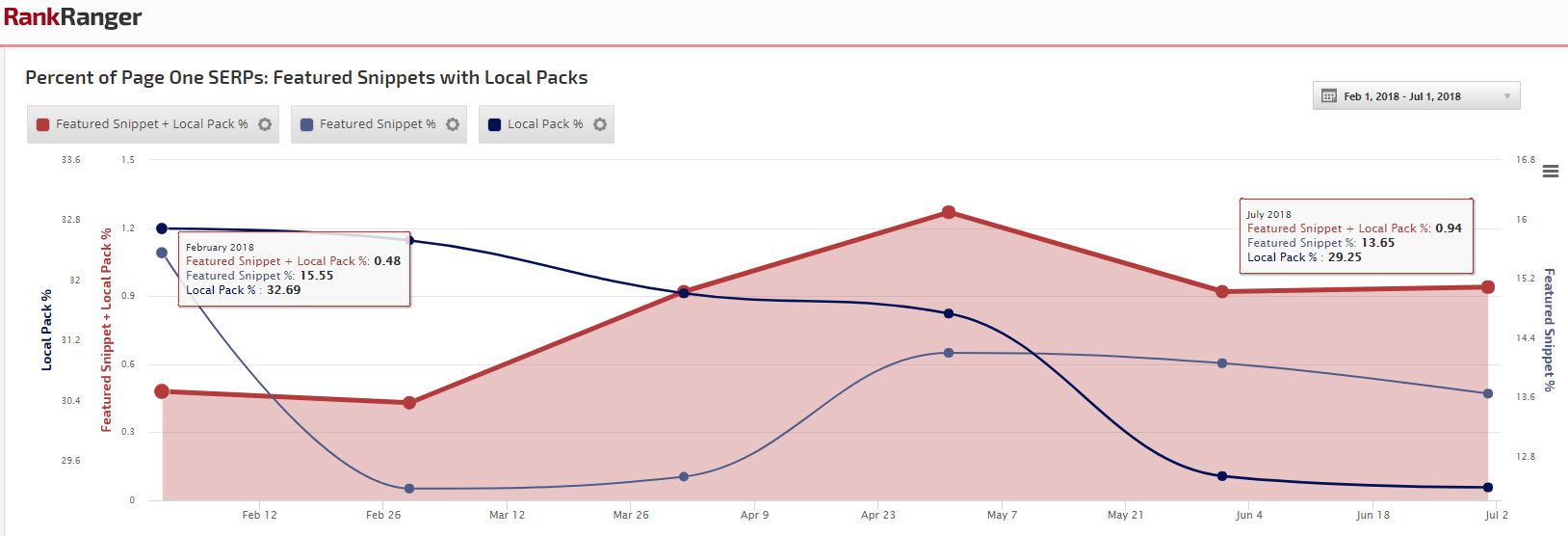
Further strengthening the case for local SEO are the fascinating stats that surround it. 46% of all searches performed on Google have ‘local intent’ (SER), “near me” searches are increasing 150% faster than traditional, local-based searches (Google) and 29% of all Google search engine result pages contain a snack pack in the results (RankRanger). 

With all of the advantages and buzz around local SEO, it comes to no surprise as to why so many businesses are battling it out to be included in the local 3 pack. So, what can you do to get in there? Here are the best ways to optimise your business for local SEO.

Improving your local SEO

1.       Create & Optimise Your Google My Business Listing

First things first, to get started with local SEO, you’ll need to create a Google My Business listing. For no charge, this establishes your business’ online presence and means you will appear on Google Maps. Not only will your business appear in search results across a variety of devices, but if Google authenticates your listing as a legitimate business, it could also appear in the sidebar space of a Google search.


There are several ways in which you can optimise your GMB listing to ensure Google not only sees your business but chooses it to appear in local search results. These are:

  • Keeping everything consistent between your listing, website & other online listings
  • Filling in every data point available i.e. Name, Address, Bio and Shortname
  • Keeping crucial business data updated such as opening hours and holidays
  • Get more reviews and engage with any that you do get


2.       Gain Regular Reviews

The last point that we made above is an important one. Getting your customers to leave glowing reviews about your business doesn’t just help to optimise your GMB listing and presence, but it also encourages more local customers to buy from you. The more footfall that your business experiences can lead to further positive reviews which then helps to build more signals to Google that your business is legit and worthy of ranking highly in local searches. Some tips to encourage your customers to leave positive reviews are:

  • Respond to existing reviews in a professional way, addressing any negative reviews that you may get and thanking reviewers for sharing their positive experiences
  • Asking for a review in-person after a sale has been made
  • Send post-purchase communications asking customers to leave reviews


3.       Optimise for Voice Search

Voice search has been rapidly growing over recent years, especially in terms of SEO. Therefore, it is crucial to optimise your content into a voice search-friendly manner, focusing on the way people ask questions when they speak rather than when they are typing. When performing voice searches using specific devices such as an Amazon Echo or Google Home or a voice assistant such as Siri, searchers opt for more long-tail keywords compared with regular search. As a result, you’ll have to adjust the SEO of your content to fit the more conversational tone of someone talking. A good tip here is to focus your efforts on traditional question starters such as who, what, when, where, why and how.


4.       Making Your Website Mobile-Friendly

Online mobile searches have also grown in popularity over the last decade with the increase in accessibility to mobile devices. In fact, in 2017, Google released its mobile-first indexing search results that prioritised mobile-optimised content over non-optimised content and even made it their primary index. This confirms the strategy behind optimising websites and content to be mobile-friendly, not just for local SEO, but for SEO as a whole.

Some tips for making your website more mobile-friendly are:

  • Ensure your website loads quickly
  • Use images and website copy only when needed and avoid filler content
  • Use bigger fonts that are easy to read
  • Implement an enhanced user interface for a great experience


5.       Greater Focus on Local Keywords

One of the most obvious ways to rank for local search results is to focus on local keywords, right? Of course, it is! Google’s own Keyword Planner allows you to filter keyword searches based on location, so you can get a better idea and understanding of the popular search terms for a specific area. This enables you to form a list of relevant local keywords that you can target to give yourself a better chance on ranking. Once you have these keywords, you can begin to implement content, meta tags and URLs to match.

Another great tactic that you can implement to increase local SEO results is to include mentions of location-specific landmarks and hotspots in your site’s content. For example, if your business offers web design in Cardiff city centre, including references such as “web design near Cardiff castle” could also bolster rankings in local search results.


6.       Implement Location Pages or Location-Focused ‘About Us’ Pages

If your business operates in more than one location, then location pages are a must. These pages allow you to target very specific location-based keywords around a main keyword e.g. “Cardiff decking” and “Slough decking”. At the minimum, each of these pages will need to provide the following information:

  • Opening hours
  • Name, address and phone number
  • Reviews
  • Promotions
  • Google Maps location

When adding these pages to your site, it’s important to remember that standards SEO rules still apply and content should be unique.

If your business only operates in one location, then having an ‘About Us’ page that focuses on local, relevant information is imperative. If you run a coffee shop, for example, your About Us page is the perfect place to provide information that you supply the coffee and cakes for local fundraisers each year. This reaffirms your commitment to your local community and provides potential customers near you with confidence in your business, which can lead to increased levels of business and many of the aforementioned benefits such as positive reviews.


7.       Take Advantage of Online Directories

Websites such as Yell, Yelp, YellowPages and Foursquare are online business directories that help to get your business name, address and phone number (NAP) on the web, which is one of the most important, if not the most important element of local SEO. NAPs act the same way as backlinks do to a website and let Google know that multiple places on the web are talking about or mentioning your business. The key thing to remember when adding your business to these online directories is to ensure that all information remains consistent.

Online business listing should include the following basic information:

  • Accurate business name, address and phone number which is consistent across all directories
  • A backlink to your website if you have one
  • A thorough description of your business


8.       Build High-Quality Backlinks

According to Moz’s 2018 Local Search Ranking Factors study, ‘link signals’ were ranked number one and number two respectively in the most important factors for ranking in local organic rankings and the local pack and snack pack. Link signals are backlinks that point back to your website, so it’s important to get as many of these as possible, however, you do need to focus on their quality more than anything. The more relevant and authoritative the backlink is, the greater the signal is going to be to Google that your business is legitimate and also relevant to the local search being performed.

Some tips that you could follow to create high-quality backlinks to your website are:

  • Guest blogging on reputable websites that have a high domain authority
  • Produce high-quality content on your website that others want to link to
  • Engage with local businesses and influencers to link back to your website


SEO is a fast-moving and ever-changing industry, so you never know when Google will introduce new and innovative features to its search engine results page for local searches, but they are more or less guaranteed. Therefore, it is vital to keep on top of changes that can impact your local SEO. By starting off implementing the above eight points, you will ensure that your business not only takes advantage of lucrative local search opportunities but builds a solid platform that can be taken forward and progressed further when new and exciting local SEO features are announced.

Want to know more about how Designer Website can help your business with its local or national SEO, be sure to visit our search engine optimisation page today to see the professional and quality SEO services that our team of experts can provide. You can also get in touch with us if you require anything else!

 

Our SEO Services >

seo basics, seo for bloggers

For amateur and professional bloggers alike, the art of SEO is one that must be practised and perfected in order to ensure your content performs to its fullest potential.

That being said, to the untrained, non-SEO aficionado, the optimising content for search engines can seem like a daunting task.

Luckily, it can be a lot easier than you would think; optimised blogs that are ready, willing and able to perform aren't just reserved for those that have a computer science degree.


SEO for Bloggers

Neglecting to implement the SEO basics can act as the ultimate anchor that’s guaranteed to drag your content down the pecking order.

To help your blog soar to the SERP heights it deserves, try implementing these simple SEO basics into your content and turn your underperforming blog into a Search Engine Optimus Prime.


Need for Site Speed

If your idea of reducing cookie size is to bite it in half, chances are you won’t know how to minify HTML or make AJAX cacheable either.

Luckily, there are simple ways to help boost the speed of your blog page and perhaps the easiest of these is to optimise your images.

Most bloggers will be well-aware of the benefits of imagery within a blog and include them accordingly, so optimising these images is vital.

Compressing the image file can work wonders, as can appropriate resizing; however, be sure to scale outside of HTML.

Finally, name the file appropriately and make the most of the Alt Text, ideally using relevant keywords in both.


Beverly Hills Copy

Reading copy online can be notably different to reading in print, particularly when it comes to article length.

While a chunk of text on a page may seem manageable, seeing a long, scrollable block of text can be off-putting, often leading the visitor to either skim-read or potentially not read your blog at all.

As such, quality copywriting is key and layout is never more important. To sum it up in a sentence, don’t waffle, be engaging and make the most of space by breaking up your text.

In addition to improving the quality and readability of your content, top-notch copy will also keep readers engaged in your blog for longer.

The resulting “time on page” and “session duration” stats will ultimately lead Google to the conclusion that you’re producing Grade A content (which hopefully is true!) and reward you accordingly with a better ranking.


Back-Link to the Future

How many times have you fallen down the YouTube rabbit hole, watching countless related videos only to wind up a million miles away from where you started? Such is the power of related content.

Internal linking is your blog’s very own rabbit hole, allowing your readers to easily navigate from the original blog to topics of relative interest with ease. Best of all, it keeps your readers engaged with your content for longer and, most importantly, keeps them on your site.

It’s also an inherently easy way to share link equity around your site; however, this shouldn’t be taken as an opportunity to shoe-horn in as many links as possible. Aim to keep your links as relevant as possible to the original post, ideally linking related anchor text within the body of the blog.

For example, a blog on a motoring site about legal tread depth would be perfect to link from an article about changing a tyre. Conversely, it’s probably not the best blog to link to from a blog about fashion.


Clash of the Titles

While it may seem obvious, it’s worth covering all the same – optimising your meta titles is vital when it comes to SEO.

If you’re targeting specific keywords, it’s a wise move to include your most relevant one in the title itself. If you’re writing a blog around the subject of the Atkins diet, there’s no reason that phrase shouldn’t be the title itself.

While the headers to become less impactful as you go down the line (H1s to H2s to H3s, etc.), incorporating keywords into your main headings and titles can reap many rewards.

It’s also important to remember that excessively long titles will become truncated, leading to what is, essentially, half a title.

Aim to keep your titles under 60 characters to ensure your blog title makes the cut without taking a cut.


URL-Raiser

Much like the title of the blog, another easy way to make your blog SEO friendly is to optimise the URL.

A URL that’s excessively long and/or full of random numbers, letters and symbols does no favours to anyone: from the person reading it to the person writing it and search engine bots in between.

A keyword-rich URL that’s concise, accurate and readable is key. This can help enhance visibility and social sharing, while it can also contribute to better SEO performance due to the fact that URLs are commonly used as anchor text via copy and pasting.

A link to sampleblog.net/URL-advice is pretty self-explanatory, even if the title of the blog itself is not present, increasing the user experience as a result. Conversely, ambiguous URLs can be off-putting, deterring clicks as a result.


For more SEO tips and blog writing advice, check out our SEO blogs for further details. Alternatively, why not drop us a line and find out all about our professional SEO services at Designer Websites? Call now on 01446 339050 or click the button below to get in touch online.

Get in Touch

outdated seo, seo techniques

The world of SEO is a lot like the world of fashion: if you want to stay relevant, you’ve got to keep up with the latest trends.

For SEO specialists, that means staying abreast of the latest Google algorithm updates and failing to do so can see you fall behind as a result. What’s more, continuing to use outdated SEO techniques can not only be ineffectual, it can even result in you being penalised as a result.

While the list of ageing SEO tactics grows with each passing year and every additional algorithm update, there are still a few old-school SEO techniques that continue crop up, despite their ineffectiveness.

Here are a handful of the most common outdated SEO offenders still prevalent in 2019.


Exact-Match Domains (EMDs)

Exact-match domains are essentially examples of websites where the web address itself is rich in keywords and describes what the site itself does.

For example, a business that focuses on student housing in Cardiff may have opted for a domain like studenthousingcardiff.co.uk. Think of it as the Ronseal effect – it does exactly what it says on the tin.

EMDs were once deemed to be a fool-proof SEO tactic, allowing sites to scale the SERPs like Sly Stallone in Cliffhanger. However, their effectiveness has since plummeted and the popularity of EMDs has fallen dramatically… like John Lithgow in Cliffhanger.

Nineties movie references aside, EMDs today are more of a deterrent than an SEO tool, appearing spammy and illegitimate to both Google and Joe Public alike. This can, in turn, hinder conversions and make link building more difficult.


Exact-Match Anchor Text

Exact-match anchor text is hyperlinked text that matches the exact desired keyword or phrase of the page. While sparing use can be…well, useful, overuse can be extremely detrimental to your site.

Exact-match anchor text can be seen by Google as a tell-tale sign of deliberate link building and, as such, can be deemed to be search engine manipulation, resulting in your page/site being penalised.

To avoid incurring a penalty, try to create natural links related to the anchor phrase by either opting for a partial match or an unmatched linkable phrase.

For example, if the exact match keyword is “Halloween costumes”, a partial match could be the phrase “Check out our range of Halloween costumes”.

Meanwhile, a safer bet would be to link the phrase “Check out our variety of spooky fancy dress options” – relevant yet completely unmatched.


Dedicated Pages for Keyword Variations

While the old-school method of targeting a single keyword on a specific page may have worked in a by-gone era, Google’s ever-evolving algorithm has luckily put this process to bed and tucked it in tight.

Thanks to the increasingly clever semantics of Google’s Knowledge Graph, the search engine is now able to take into account relative words and phrases that correspond to the search term.

The arrival of RankBrain – Google’s cutting-edge AI system – allowed it to understand the user intent even further, providing even more relevancy and accuracy in the search results.

If you have created singular pages for keyword variations in the past, keeping such superfluous content can be an issue and actually hinder your positioning in the SERPs.

If possible, merge the content and remove the surplus pages, placing their desired relevant keywords in positions of prominence within the surviving page.


Writing for Bots

Another classic way of attempting to boost Google rankings is to tailor your content to appeal to Google bots, keyword stuffing and shoe-horning phrases in wherever they will fit (and even where they won’t).

For example, once upon a time, a blog targeting the keyword term “writing for bots” may have looked like this:

“Writing for bots is great for SEO. If you’re thinking of writing for bots, check out our guide on writing for bots to help you uncover the secrets of writing for bots.”

Thankfully, this form of content manipulation has been largely eradicated, allowing the content itself to flow naturally and freely in a far more logical and readable way.

Think of it as the digital equivalent of forcing an impressive phrase into your French oral exam. While it may tick the box in terms of application, the phrase itself can be extremely out of place contextually and stick out like a sore thumb in practice.

Bottom line: write for the individual reading it, not the bot combing it, to ensure your content is extraordinaire and not a whole lotta bof.


Irrelevant Links

Google is continuously updating its system to keep spam to an absolute minimum, with algorithm changes constantly evolving the way it processes our search requests.

In the pursuit of backlinks, some SEO strategists will opt to link to any content regardless of quality, provided it garners reciprocated backlinks to their site. Nowadays, if this happens to enter spam territory, it could spell trouble.

Relevant backlinks that are relative to your target demographic, your business or your market, providing useful user information can help improve your SEO standing.

Conversely, off-topic, irrelevant links that have nothing to do with your content can have an adverse effect and attract penalties from Officer Google.


For more information on outdated SEO techniques and the best tips for today, why not check out our other SEO blogs? Alternatively, drop us a line on 01446 339050 or use the button below to get in touch online.

Contact Us

A&L Scrap Car Dealers Website

A&L Scrap Car Dealers, the new addition to A&L Vehicle Recycling, is a family-run scrap car dealership located in the heart of Barry, South Wales. With more than 10 years’ experience within the scrap car and recycling industry, A&L provides professional and reliable services that their customers within the local and surrounding areas can trust. A&L’s business has been developed throughout the years on the excellent recommendations of their loyal customers in both scrap car and scrap metal services. However, without an established online presence apart from a few listings in local directories, A&L weren’t fully able to reach a wide range of customers that could elevate their business to the next level. That’s where we came in!

How did we help?

A&L approached the team here at Designer Websites as they were looking to build the online presence that the company desperately needed. Having been without a website, potential customers were having to find information on the company and the services that they provided via directory listings or through the business’ Facebook page, both of which contained scarce details. We were tasked with creating a functional website that delivered the important information about the company and the services that they offered as well as integrating a quote system that potential customers could use to discover the value of their car if they were looking to scrap it.

As A&L had no previous website, our design, SEO and development team had to work from scratch to deliver what was needed. As a result, comprehensive keyword research was conducted in order to identify industry-specific search terms, so that pages could be designed and created to include optimised copy and SEO. This enabled A&L to better capture online searchers and rank highly within search engine results. Once the design and copywriting were complete, we created the unique quote system that allowed users to input their car’s registration number and receive a free, no-obligation quote for the value of their car. This was developed in-house with every step of the process carefully curated, including a postcode lookup, which helps populate address fields. The quote system has been integrated with https://ukvehicledata.co.uk/pricing in order for accurate and reliable vehicle data to be pulled and displayed to the user.

We are proud to announce that the new A&L Scrap Car Dealers website is now live and can be viewed here!

If you are interested in having an existing site re-designed or having a new, bespoke site developed for your business, then please feel free to get in touch with the Designer Websites team below.

Contact Us >

white hat seo,white hat seo tips,white hat seo techniques,what is white hat seo

Wading through the muddy waters of Lake Google can be a troublesome task at the best of times, particularly when it comes to SEO.

Regular algorithm changes habitually move the digital goal posts, making the ability to adapt and react a vital part of the job for any self-respecting online marketing with an eye for SEO.

Naturally, the sheer volume of competition makes it difficult to swim to the surface of the SERP rankings, leaving you to jockey for position in an extremely crowded pool.

While it can be tempting to take shortcuts, the purest approach is often the one that has the longest lasting effects and they don’t come much purer than White Hat SEO.

So, dust off your ivory caps, mount that high horse and head for the moral high ground, as we take a look at the ins and outs of White Hat SEO.


What is White Hat SEO?

If you read our last blog on Black Hat SEO techniques, you should know all about what not to do and which SEO tactics to avoid. From keyword stuffing to invisible text, it’s a dark art and one that can also be pretty risky.

This underhanded approach of manipulative methods and sneaky shortcuts will only work for so long before you inevitably get found out. The resulting penalty can see your site plummet down the search rankings and possibly even banished from the SERPs altogether.

On the other hand, there is White Hat SEO. The Ying to the Black Hat’s Yang, White Hat SEO offers Google-approved SEO strategies that play by SEO rules and regulations. White Hat SEO tactics are the best way to create an ethical online listing that isn’t in danger of falling out of favour.


Examples of White Hat SEO Techniques

Now we’ve identified what White Hat SEO is, it’s only fair that we paint a full, snowy picture to completely illustrate its squeaky-clean, albino goodness.

To help keep your SEO plan righteous, virtuous and, most importantly, effective, here are a few examples to keep you on the White Hat straight and narrow.


Keyword Research

Like any job, doing your homework before you jump in can reap many rewards and SEO is no different. Modern KW technology makes it relatively simple to identify a laundry list of keywords for you to sprinkle within your content in order to keep it ranking and relevant.

However, it’s important not to go overboard. There’s a fine line between keyword inclusion and keyword stuffing, and overuse of keywords could see the former become the latter with seamless ease.

Additionally, try not to choose keywords that are hugely competitive. The greater the demand, the less likely you are to rank. Instead, target long-tail keywords for a better chance of hitting the jackpot.


Quality Content

In the world of SEO, content is truly is king and quality content will rule the roost long after it’s first penned (especially if its evergreen). As such, creating well-written content that’s readable and engaging is one of the most effective White Hat SEO techniques there is.

While it can be time-consuming, providing original content that is relevant and useful to your site visitors can translate into serious results. The top 10 blog listings on Google typically comprise of 2000 to 4000 words, so don’t be afraid to dive deep into the subject matter.

Creating unique content about topics you fully understand and have expert insight to can help establish you as an authority on the subject, making your content both original and sharable. Which leads us nicely to…


Link Building

Backlinks are Google’s main indicator of which site page is most reliable and relevant to the search term, and therefore most worthy of a high SERP listing. As a rule of thumb, the more backlinks a page has, the higher it will rank on Google.

Backlinks can be gained ethically by writing testimonials, guest blogging and creating partnerships with other sites. Meanwhile, creating original, authoritative content that’s sharable is also a great way to organically bolster your backlinks.


Business Listing

In its never-ending quest to provide increasingly accurate results, Google also takes into account the location of a business when displaying SERPs. This can particularly helpful for those looking for local services.

For example, a Brummy on the hunt for a restaurant in Birmingham probably isn’t going to be interested in a steakhouse in Birmingham, Alabama. As such, Google weeds out the irrelevant and reports back with the most applicable geographical results.

Adding a Google My Business (GMB) listing for your company is a great White Hat technique in ensuring local SEO. Meanwhile, it could also attract additional traffic through Google Maps’ “near me” function – a tool used by 82% of overall smartphone users (rising to 92% for Millennials) according to figures published by Uberall.


For more information on White Hat SEO techniques and how to avoid Black Hat SEO, drop us a line on 01446 339050. Alternatively, drop us an email using the button below.

Get in Touch